Buldak불닭
'Fire Chicken' - and the Samyang Buldak Fire Noodles Behind the Challenge
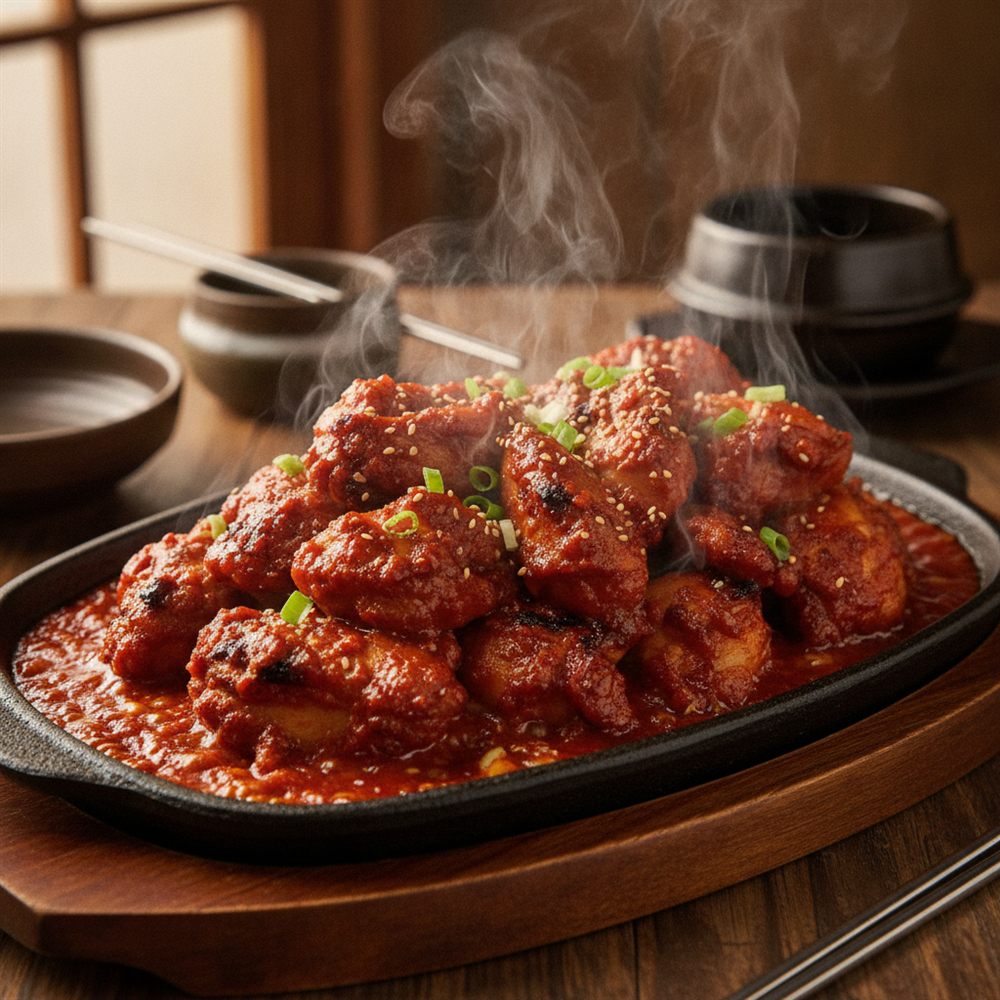
'Fire chicken': originally a brutally spicy grilled chicken dish, now globally famous as Samyang's Buldak instant noodles, the fuel of the Fire Noodle Challenge.
Similar to: The instant noodles are like the Korean cousin of the hottest 'dare' hot sauce dishes at a wing joint, the kind restaurants make you sign a waiver for, except in chewy stir-fried noodle form. The original grilled buldak is a bit like the spiciest, most reckless plate of fiery barbecue chicken you have ever been double-dared to finish.
KFG Score
How we rate →Buldak appears in these rankings
The bottom line on Buldak
Let us be honest: buldak is genuinely very hot, and this is not a gentle introduction to Korean food. The regular Samyang fire noodle sits around 4,400 Scoville and the heat builds as you eat, so if you are new to serious spice, start with the original flavor — not the 2x, 3x, or Hek versions.
Cheese is your best friend — a slice melted on top tames the burn a lot. Keep milk or plain rice nearby rather than water, which only spreads the heat, and a fried egg helps too.
Want to try Buldak?
Find Korean restaurants near you on Google Maps — see who serves it, with hours and reviews.
Affiliate link — we may earn a commission at no extra cost to you.
What is Buldak?
Buldak literally means 'fire chicken' (bul = fire, dak = chicken). It started in the early 2000s as a Korean bar dish: chunks of chicken drenched in a fiercely spicy gochugaru-and-chili sauce and grilled or torched until charred, eaten by people who wanted to sweat and suffer a little for fun. The dish had a moment, then faded. What made 'buldak' a household word around the world is the instant-noodle version: Samyang's Buldak Bokkeummyeon (fire chicken stir-fried noodle), launched in 2012. It is a dry stir-fried ramyeon, you boil the noodles, drain the water, and coat them in a thick, dark-red spicy chicken sauce. It became a global phenomenon through the Fire Noodle Challenge, where people film themselves eating the whole spicy bowl (or the sauce packet neat) and reacting to the burn. Today most non-Koreans who say 'buldak' mean those noodles.
What does it taste like?
Aggressively spicy, but with a sneaky sweetness that keeps you coming back. The sauce is deep chili-red, savory, a little sweet and garlicky, with a smoky grilled-chicken note in the original dish. The heat builds: first bite seems manageable, then it accumulates on your lips and tongue and lingers. The chewy stir-fried noodles in the instant version soak up all that sauce, so every forkful is fully loaded.
🌶️ Heat: Genuinely very hot, and honestly so. The original grilled dish is fierce. The regular Samyang Buldak noodle sits around 4,400 Scoville units (roughly a hot jalapeno's range but coating every bite), and the 2x Spicy version roughly doubles that. Because the sauce is dry and concentrated, the burn feels stronger than the number suggests and it builds as you keep eating. Beginners should start with the regular flavor, not 2x, 3x, or the notorious Hek (extra) variants.
🎬 Buldak in K-dramas & K-pop
Buldak noodles became a worldwide craze less through drama plots than through people filming themselves suffering deliciously online.
- The Fire Noodle Challenge — Starting around 2014, YouTubers worldwide filmed themselves devouring a whole bowl of Samyang Buldak noodles as fast as possible, faces reddening, eyes watering, some tapping out. The 'Fire Noodle Challenge' racked up millions of views and single-handedly turned a Korean instant noodle into a global export.▶ Watch on YouTube
- K-pop idols and mukbang — Buldak noodles are a staple of Korean mukbang (eating-broadcast) videos, and countless K-pop idols have been filmed on variety shows and livestreams gamely tackling the spice, gulping milk and laughing through the burn, which kept fans buying it to eat along with their favorites.▶ Watch on YouTube
Scenes are described for reference only; we do not host any clips or images.
🧾 Key ingredients
- Chicken (thigh, for the original grilled dish)
- Gochugaru (Korean chili flakes) and chili paste
- Garlic, ginger, soy sauce, and a little sugar or corn syrup
- For the noodles: Samyang Buldak instant noodles + fire sauce packet + roasted sesame/seaweed sachet
- Common add-ins to tame it: cheese, a fried egg, milk on the side
🥗 Dietary notes
The original dish is a chicken dish, so not vegetarian. The instant noodle sauce contains chicken and other meat-derived flavorings, so the standard packs are not vegetarian either, though Samyang has released some carbonara and other variants (still check the label). Not gluten-free (wheat noodles). Very high in sodium and capsaicin, so it can be rough on sensitive stomachs; go easy if you are not used to serious heat.
To cook Buldak at home you need
The rest is fresh produce you can buy anywhere. These are the Korean staples — buy once, and they keep.
The full Korean pantry, ranked by what each staple unlocks →
How to eat Buldak
For the noodles: boil the noodle block for about 5 minutes, drain almost all the water (leave a couple of spoonfuls), then stir in the fire sauce and the dry topping off the heat. Do not eat the sauce packet straight unless you are deliberately doing the challenge. To make it survivable and, honestly, tastier, melt a slice of cheese on top, add a fried egg, or stir in a spoon of mayo. Keep milk or plain rice nearby, water will not help. For the original grilled buldak, eat it hot off the grill at a bar with cold drinks and something starchy to cut the heat.
🍜 Common variations
- Original grilled buldak (the fiery chicken bar dish)
- Samyang Buldak Bokkeummyeon (the original fire noodle)
- 2x Spicy / 3x Spicy / Hek Buldak (progressively hotter)
- Cream Carbonara Buldak (milder, milky, very popular)
- Cheese, jjajang (black bean), curry, and other flavored Buldak noodle spinoffs
- Rose (rosé) Buldak (creamy, tomato-tinged, gentler heat)
💡 Insider tips
- Start with the original flavor. The 2x, 3x, and Hek versions are for people who already know they can handle serious heat.
- Cheese is your best friend. A slice melted on top mellows the burn a lot and makes it genuinely more delicious, not less spicy-tasting.
- Do not drink water to fight the heat, it spreads the capsaicin around. Milk, yogurt, or a spoon of rice work far better.
- Leave a little of the noodle water in before adding the sauce so it turns glossy and coats evenly instead of clumping.
- Add a fried egg or some vegetables to bulk it up and buffer the heat, and eat slowly; buldak burn builds the more you eat.
Buldak — FAQ
+ − Is buldak a dish or a brand of noodles?
Both. Buldak ('fire chicken') began as a spicy grilled chicken dish in Korea. Samyang then made Buldak instant noodles, which became so globally famous that most people outside Korea now think of the noodles first.
+ − How spicy is it really?
Very. The original grilled dish is fierce, and the regular Samyang noodle is around 4,400 Scoville, with the 2x version roughly double. Because the sauce is dry and concentrated and the heat builds as you eat, it feels hotter than the number implies. This is not a gentle introduction to Korean food.
+ − How do I make it less painful?
Use less than the full sauce packet, and add cheese, a fried egg, mayo, or extra vegetables. Keep milk or plain rice on hand rather than water. Cheese in particular tames the burn dramatically while keeping the flavor.
+ − Is it safe to do the Fire Noodle Challenge?
For most healthy adults it is uncomfortable but fine in small amounts. Eating the raw sauce packet straight or wolfing multiple 3x bowls can cause real stomach pain, so know your limit, especially if you have a sensitive gut, and do not push a child or anyone unwilling into it.
Sources & further reading
Written from first-hand experience. Recipes and spice levels vary by cook, region, and restaurant. If you have food allergies, always confirm the exact ingredients before you eat.