Makgeolli막걸리
Unfiltered Rice Wine
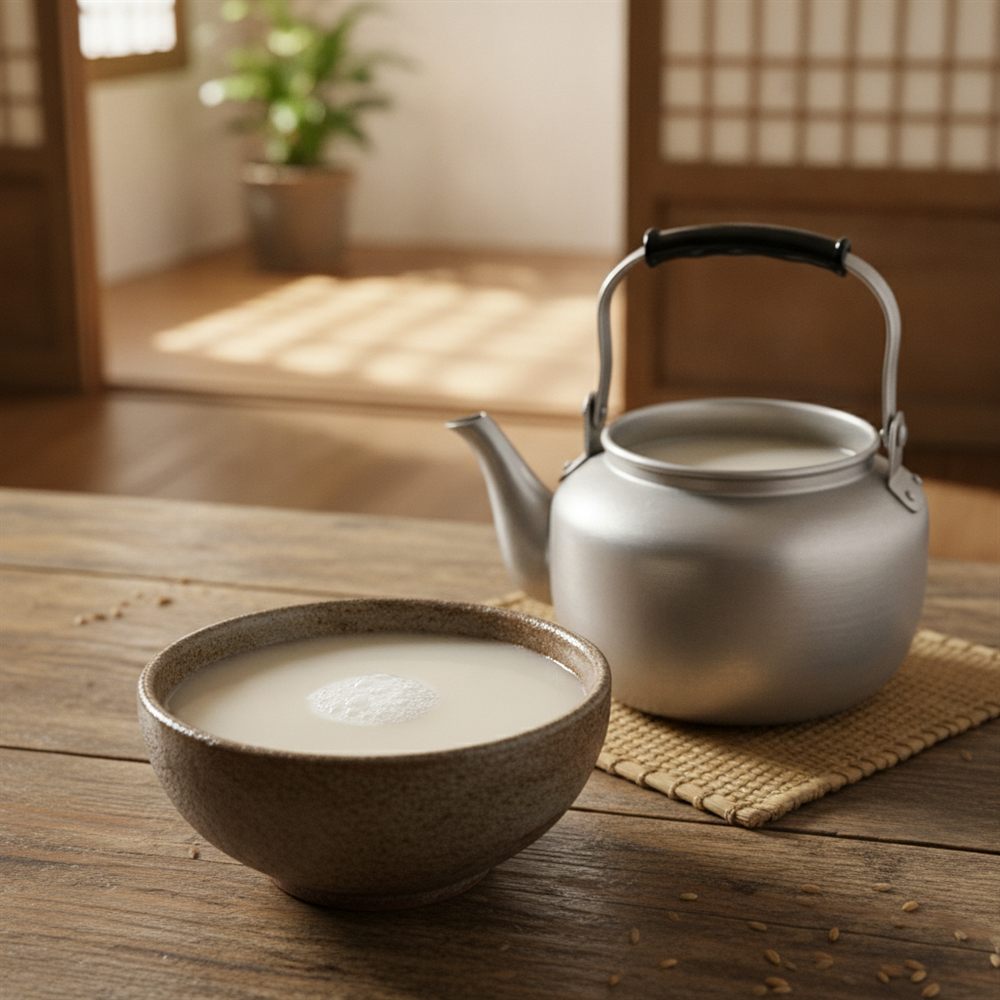
A cloudy, milky, lightly fizzy rice wine — low in alcohol, gently sweet-and-tangy, and famously the thing to drink with a savory pancake on a rainy day.
Similar to: Imagine a lightly sparkling, milky, low-alcohol rice wine — a bit like a cloudy, gently sour cross between a fizzy sake, a soft cider, and a drinkable yogurt.
KFG Score
How we rate →Makgeolli appears in these rankings
The bottom line on Makgeolli
If wine or spirits usually feel too strong, makgeolli is a gentle way in — cloudy, lightly sweet-and-sour, and only around 6 percent alcohol, similar to a strong beer. For us it carries a homey, farmers-drink history, and it has a very specific mood: rainy days, when Koreans crave it with a hot, crispy pancake.
Shake or swirl the bottle first so the settled sediment mixes back in, then pour into small bowls rather than tall glasses. Serve it cold and order it with pajeon — the pairing, especially in the rain, is a beloved ritual.
Want to try Makgeolli?
Find Korean restaurants near you on Google Maps — see who serves it, with hours and reviews.
Affiliate link — we may earn a commission at no extra cost to you.
What is Makgeolli?
Makgeolli is one of Korea's oldest alcoholic drinks: a milky-white, unfiltered rice wine made by fermenting rice with a traditional starter called nuruk. Because it is unfiltered, it is cloudy and a little thick, with a soft natural fizz. It was historically the drink of farmers and working people — cheap, filling, and refreshing — and it has had a big revival, with craft makgeolli now taken as seriously as craft beer. It comes in wide bottles or traditional kettles and is poured into small bowls rather than glasses. There is a deep cultural link between makgeolli and rainy days, when Koreans crave it alongside a hot, crispy pancake.
What does it taste like?
Lightly sweet, gently sour, and a touch yeasty, with a soft sparkle and a creamy, slightly thick body. It is low in alcohol — usually around 6 percent, similar to a strong beer — which makes it very easy to drink. The flavor is fresh and a little tangy rather than boozy, and craft versions can taste of anything from banana and yogurt to chestnut. Because it settles, the bottom is thicker and more flavorful, which is why you shake or stir it before pouring.
🌶️ Heat: Makgeolli is a drink with no chili heat at all — just a mild, refreshing tang and a low level of alcohol.
🎬 Makgeolli in K-dramas & K-pop
This milky rice wine has one very specific on-screen mood: rain.
- Rainy-day scenes — Makgeolli paired with a hot, crispy pajeon is the comfort ritual dramas reach for the moment it starts to pour outside.▶ Watch on YouTube
Scenes are described for reference only; we do not host any clips or images.
🧾 Key ingredients
- Rice
- Nuruk (traditional fermentation starter)
- Water
- Sometimes wheat or added flavorings in modern versions
🥗 Dietary notes
Makgeolli is vegan (rice-based, fermented), but it is often NOT gluten-free — the nuruk starter is frequently made with wheat, and some makgeolli adds wheat flour. If you are gluten-sensitive, look for a rice-only makgeolli. It is unpasteurized in its fresh form, so it is best kept cold and drunk fresh. It is alcohol, for adults only, and best in moderation.
How to eat Makgeolli
Shake or gently swirl the bottle first, because the cloudy solids settle to the bottom and you want them mixed back in. Pour it into small bowls (traditionally a brass or ceramic bowl) rather than tall glasses. It is very much a food drink — the classic, almost sacred pairing is with pajeon (savory scallion or seafood pancake), especially when it is raining outside, a combination Koreans genuinely look forward to. It also goes well with other savory anju like tofu and stews.
🍜 Common variations
- Craft and flavored makgeolli (chestnut, banana, peach, corn, etc.)
- Dongdongju (a related, slightly less filtered rice wine with floating rice grains)
- Makgeolli cocktails and slushies
💡 Insider tips
- Shake or swirl the bottle before pouring so the settled, flavorful sediment mixes back in.
- Serve it cold, and drink it fresh — makgeolli is at its best when it is young and lively.
- Order it with pajeon (a savory pancake); the pairing, especially on a rainy day, is a beloved Korean ritual.
- It is low in alcohol and easy to drink, which sneaks up on people — enjoy it at a relaxed pace.
- If you liked it, try a craft or flavored makgeolli next; the range now is huge.
Makgeolli — FAQ
+ − What does makgeolli taste like?
It is milky, lightly sweet and sour, a bit yeasty, and softly fizzy, with a creamy body. It is fresh and easy-drinking rather than strong or boozy.
+ − How strong is makgeolli?
Usually around 6 percent alcohol, similar to a strong beer — much lighter than soju. That low strength and sweet-tangy flavor make it very approachable.
+ − Why do you shake makgeolli before pouring?
Because it is unfiltered, the rice solids settle at the bottom. Shaking or swirling remixes them so every pour has the full, creamy flavor and color.
+ − What do you eat with makgeolli?
The classic pairing is pajeon (savory Korean pancake), especially on rainy days. It also goes well with tofu dishes, stews, and other savory snacks.
Sources & further reading
Written from first-hand experience. Recipes and spice levels vary by cook, region, and restaurant. If you have food allergies, always confirm the exact ingredients before you eat.