Cheese Cup Ramyeon치즈 컵라면
Instant Ramen with Melted Cheese
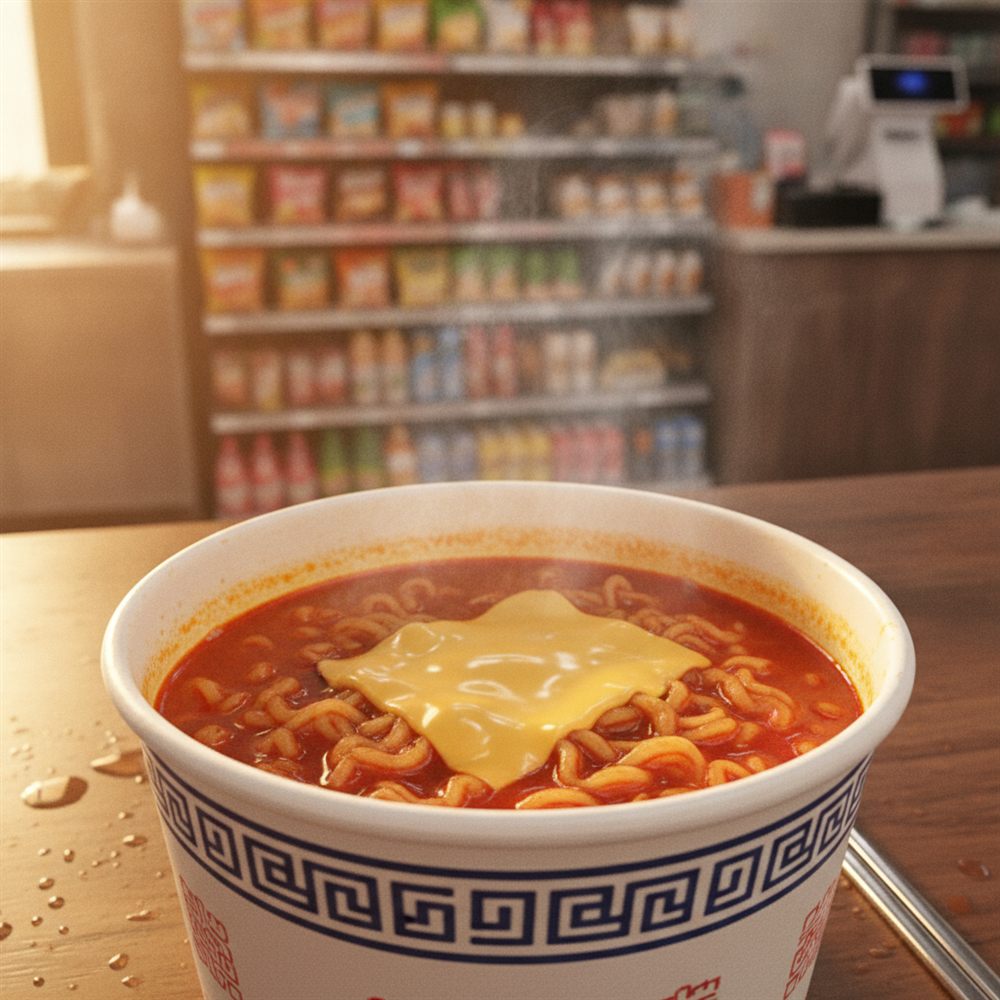
A simple convenience-store hack: drop a slice of cheese into a cup of spicy ramyeon and let it melt. The cheese mellows the heat and adds a creamy, almost cheesy-ramen-carbonara richness. Cheap, five seconds of effort, huge payoff.
Similar to: Picture instant ramen crossed with a bowl of mac and cheese, or a spicy broth that suddenly turns into a lazy carbonara. If you have ever melted a slice of American cheese into a pot of noodles as a hungry teenager, this is the same instinct, just perfected and spicy.
KFG Score
How we rate →Cheese Cup Ramyeon appears in these rankings
The bottom line on Cheese Cup Ramyeon
If Korean spice makes you nervous, this is the friendliest place to start. A spicy cup that normally sits around a 3 drops to about a 2 once the cheese buffers the chili, which is why spice-shy eaters lean on it. For us in Korea this is no internet invention, we have added cheese to ramyeon at home for decades.
The trick is timing: lay the slice on the noodles the second they finish, close the lid a minute, then stir well so it turns creamy instead of clumping. Want it milder still? Use two slices.
Want to try Cheese Cup Ramyeon?
Find Korean restaurants near you on Google Maps — see who serves it, with hours and reviews.
Affiliate link — we may earn a commission at no extra cost to you.
What is Cheese Cup Ramyeon?
This is the entry-level upgrade every Korean learns early: you buy a hot cup of instant ramyeon and add a single slice of processed cheese (or a stick of string cheese, or a handful of shredded mozzarella) right on top of the just-cooked noodles. As it sits, the cheese melts into the broth and clings to the noodles. It costs almost nothing extra because convenience stores stock those individually wrapped cheese slices right by the counter. For students and single-person households, it is the easiest way to turn a plain 1,500-won cup of noodles into something that feels indulgent. The idea is old-school Korean home cooking, adding cheese to ramyeon has been around for decades, but the cup-noodle convenience-store version is what turned it into a social-media staple.
What does it taste like?
The cheese does two things. First, it tames the spice, softening that sharp chili edge into something rounder and gentler. Second, it makes the broth creamy and slightly salty-savory, so a plain spicy soup starts tasting like a lazy cousin of cheese ramen or even carbonara. The noodles come out coated and glossy, and there is a stretchy, gooey pull when you lift them. It is comfort food at its most shameless.
🌶️ Heat: Even if you start with a spicy cup like Shin Ramyun (normally around a 3), the melted cheese knocks the heat down to about a 2 out of 5. The dairy coats your mouth and buffers the chili, which is exactly why nervous eaters and kids use this trick. Want it milder still? Add two slices instead of one.
🎬 Cheese Cup Ramyeon in K-dramas & K-pop
This combo blew up on Korean food social media.
- YouTube & TikTok cheese-melt close-ups — The single most viral moment is the slow-motion shot of a cheese slice slumping and melting over bright red ramyeon, followed by a glossy, stretchy noodle pull. It became shorthand for 'the easiest life-changing food hack,' and non-Koreans adopted it instantly because it needs zero cooking skill.▶ Watch on YouTube
- Spice-taming reaction videos — Creators who struggle with heat film themselves eating a spicy cup plain, wincing, then adding cheese and visibly relaxing. The before-and-after made it the go-to recommendation for anyone scared of Korean spice.▶ Watch on YouTube
Scenes are described for reference only; we do not host any clips or images.
🧾 Key ingredients
- Cup ramyeon (a spicy one like Shin Ramyun works best)
- Sliced processed cheese, string cheese, or shredded mozzarella
- Hot water from the store dispenser
- Optional: a boiled egg or a spoon of rice to bulk it up
🥗 Dietary notes
The cheese is dairy, so this is never vegan. Standard ramyeon soup powder usually contains beef or seafood extract, so strict vegetarians should look for a veggie-based cup. Contains gluten (wheat noodles) and milk. It is a good option for people who love ramyeon but cannot handle much spice.
How to eat Cheese Cup Ramyeon
Step 1: Peel the cup ramyeon lid halfway, add hot water to the fill line, and close it for 3 to 4 minutes so the noodles cook. Step 2: Open the lid and immediately lay a slice of cheese flat on top of the hot noodles (or drop in string cheese torn into pieces). Step 3: Close the lid again for about 30 seconds to a minute to let the cheese melt. Step 4: Stir gently so the melted cheese blends into the broth and coats the noodles. Step 5: Eat right away while it is stretchy and hot. If you want a fuller meal, stir in a scoop of rice or add a boiled egg from the store counter.
🍜 Common variations
- Double cheese for extra creaminess and even less heat
- String cheese or mozzarella for a stretchy, gooey pull
- Buldak (fire noodle) cup plus cheese for the spicy-creamy version
- Add a boiled egg for protein and a softer broth
- Stir in leftover rice at the end for a cheesy rice porridge
💡 Insider tips
- Add the cheese right after the noodles finish cooking, while everything is at its hottest, so it melts cleanly.
- Close the lid for another 30 to 60 seconds after adding cheese. That trapped heat does the melting for you.
- Stir well. Un-stirred cheese clumps at the bottom instead of making the broth creamy.
- Use two slices if you want it genuinely mild. One slice softens the heat; two nearly erase it.
- A scoop of rice stirred in at the end turns the cheesy leftover broth into a rich, filling porridge.
Cheese Cup Ramyeon — FAQ
+ − Does cheese really make ramyeon less spicy?
Yes. Dairy fat coats your mouth and buffers the chili compounds, so a spicy cup like Shin Ramyun becomes noticeably gentler. Add a second slice if you want it even milder. It is the most common trick Koreans recommend to spice-shy friends.
+ − What kind of cheese works best?
Individually wrapped processed cheese slices are the classic convenience-store choice because they melt fast and smooth. String cheese or shredded mozzarella give you that stretchy pull. Any melty cheese works; avoid hard aged cheeses that do not melt well.
+ − Is this a real Korean thing or just internet food?
It is very real. Koreans have added cheese to ramyeon at home for decades. The convenience-store cup version just made it faster and more visible, and social media turned it into a worldwide hack.
+ − Can I do this with any cup noodle?
Absolutely, but it shines with spicy cups because the cheese has heat to balance. On a mild cup it simply adds creaminess. Buldak fire-noodle fans use the same trick to make the burn survivable.
Sources & further reading
Written from first-hand experience. Recipes and spice levels vary by cook, region, and restaurant. If you have food allergies, always confirm the exact ingredients before you eat.