Dakgalbi닭갈비
Spicy Stir-Fried Chicken
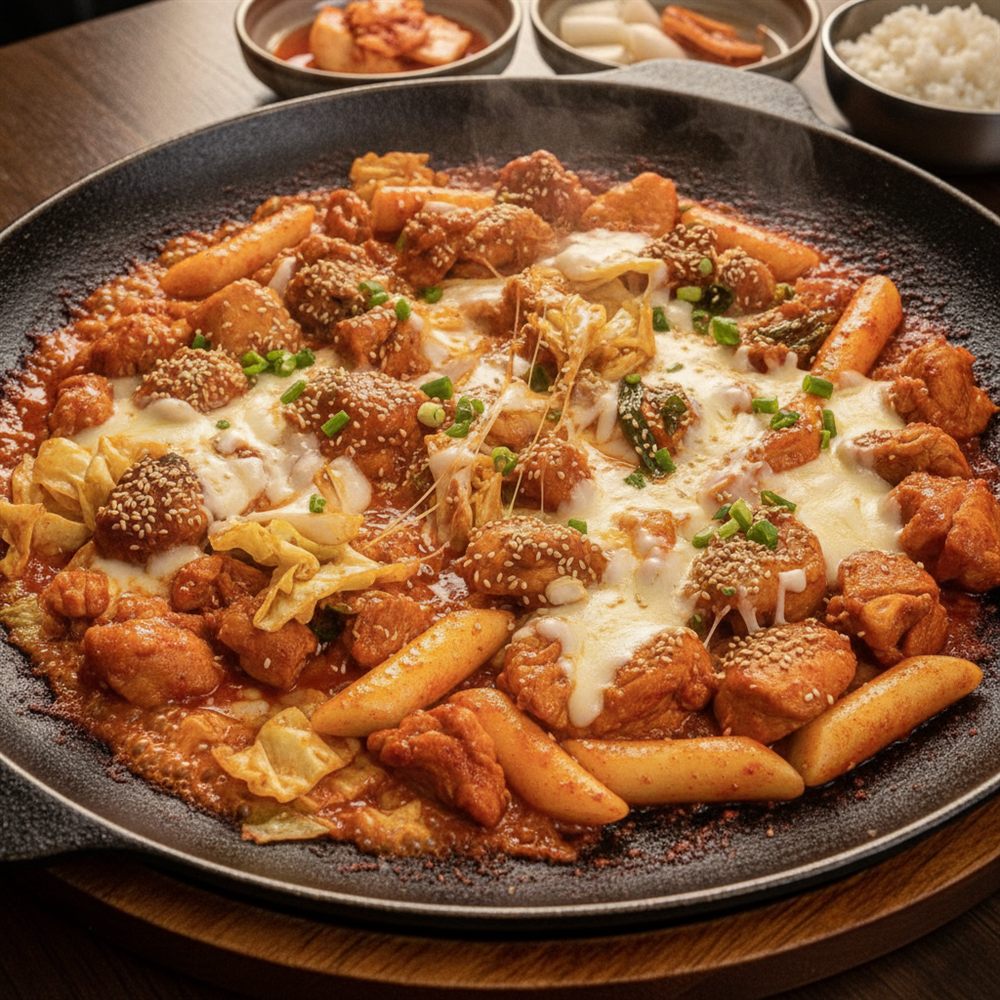
Chunks of chicken stir-fried on a big hot griddle with cabbage, sweet potato, rice cakes, and a fiery gochujang sauce. A bubbling, communal Chuncheon specialty.
Similar to: Picture a spicy chicken stir-fry or fajita platter, but everyone shares one giant sizzling pan in the middle of the table and there are chewy rice-cake dumplings mixed in. If a fajita skillet met buffalo-sauce heat and a hint of sweetness, you would be close to dakgalbi.
KFG Score
How we rate →Dakgalbi appears in these rankings
The bottom line on Dakgalbi
Dakgalbi genuinely brings the heat — a solid medium-spicy — but the sweetness of the sauce and the mild vegetables keep it from being punishing, so it is still beginner-friendly if you go in knowing that. For us in Korea it is loud, cheap, communal food, a favorite of students crowding around one big sizzling pan in Chuncheon. If you are spice-sensitive, most places will happily dial the sauce down.
The real move is to always order the bokkeumbap at the end — they fry rice in the leftover sauce right on the same griddle, and for many of us that caramelized finale is the whole point of the meal. Adding a ring of melted cheese for dipping is the classic way to cool the spice.
Want to try Dakgalbi?
Find Korean restaurants near you on Google Maps — see who serves it, with hours and reviews.
Affiliate link — we may earn a commission at no extra cost to you.
What is Dakgalbi?
Dakgalbi (dak = chicken, galbi = rib, though there are no actual ribs here) is a specialty of Chuncheon, a city east of Seoul. Bite-size chicken is marinated in a red gochujang-based sauce and stir-fried on a massive round griddle set into the table, together with cabbage, sweet potato, perilla leaves, onions, and chewy tteok (rice cakes). Everyone digs into the same pan, pushing and turning the ingredients with two big spatulas as it all caramelizes and bubbles. It is loud, communal, cheap, and a favorite of students and young people. Chuncheon even has a "Dakgalbi Street" lined with restaurants doing nothing else.
What does it taste like?
Boldly spicy, sweet, and savory all at once. The gochujang sauce is the star: red-hot but rounded out with sugar and garlic, clinging to every piece of chicken and vegetable. The cabbage goes sweet and tender, the rice cakes turn soft and chewy, and the sweet potato adds little pockets of sweetness that tame the heat. It is deeply satisfying comfort food with a real kick.
🌶️ Heat: This one genuinely brings heat — a solid medium-spicy. The gochujang sauce is unmistakably hot, though the sweetness and the mild vegetables keep it from being punishing. Most places can dial the spice down on request, and adding melted cheese around the edge is a popular way to mellow it.
🧾 Key ingredients
- Chicken (thigh, cut into chunks)
- Gochujang (Korean red chili paste)
- Gochugaru (red chili flakes)
- Cabbage and onion
- Sweet potato
- Tteok (rice cakes) and perilla leaves
🥗 Dietary notes
Chicken is central, so it is not vegetarian or vegan. The gochujang sauce typically contains wheat, making it not gluten-free by default. It is dairy-free unless you add the optional cheese. The heat can be adjusted, which helps spice-sensitive diners.
To cook Dakgalbi at home you need
The rest is fresh produce you can buy anywhere. These are the Korean staples — buy once, and they keep.
The full Korean pantry, ranked by what each staple unlocks →
How to eat Dakgalbi
The staff usually starts the stir-fry for you, then you take over the spatulas, turning everything so it cooks evenly and the sauce caramelizes without burning. Eat straight from the communal griddle. The best part comes at the end: order bokkeumbap, and they will fry rice, seaweed flakes, and sesame oil in the leftover sauce right on the same pan, scraping up all the crispy caramelized bits. That fried-rice finale is, for many Koreans, the whole reason to order dakgalbi. Cheese dakgalbi — with a moat of melted mozzarella to dip spicy chicken into — is a beloved variation.
🍜 Common variations
- Cheese dakgalbi (치즈닭갈비) — with a ring of melted mozzarella for dipping
- Guk-mul dakgalbi — a soupier, broth-style version
- Sutbul dakgalbi — grilled over charcoal on skewers instead of griddle-fried
- Bokkeumbap finish — fried rice cooked in the leftover sauce (a must-order)
💡 Insider tips
- Always order the fried rice (bokkeumbap) at the end — cooked in the leftover sauce, it is the highlight of the meal.
- Add cheese if the heat worries you; the melted mozzarella cools and enriches every bite.
- Wrap spicy chicken in a perilla or lettuce leaf to take the edge off the spice.
- Keep the ingredients moving with the spatulas so the sauce caramelizes instead of scorching.
- Ask for a milder sauce level if you are spice-sensitive — most places are happy to adjust.
Dakgalbi — FAQ
+ − How spicy is dakgalbi really?
It is genuinely medium-spicy, around a 3 out of 5. The gochujang sauce has real heat, but sugar, sweet potato, and mild cabbage soften it. You can ask for a milder version or add cheese to tame it considerably.
+ − Where is dakgalbi from?
It is the signature dish of Chuncheon, a city in Gangwon Province east of Seoul. Chuncheon has an entire street of dakgalbi restaurants, and locals consider it the birthplace of the dish.
+ − Does dakgalbi have actual ribs?
No. "Galbi" means rib, but dakgalbi is boneless chicken, usually thigh meat cut into chunks. The name is traditional rather than literal.
+ − What is the fried rice at the end?
It is bokkeumbap — rice fried directly in the leftover spicy sauce with seaweed and sesame oil, right on the same griddle. It soaks up all the caramelized flavor and is many Koreans' favorite part of the whole meal.
Sources & further reading
Written from first-hand experience. Recipes and spice levels vary by cook, region, and restaurant. If you have food allergies, always confirm the exact ingredients before you eat.