Dakgangjeong닭강정
Bite-Size Crunchy Glazed Fried Chicken
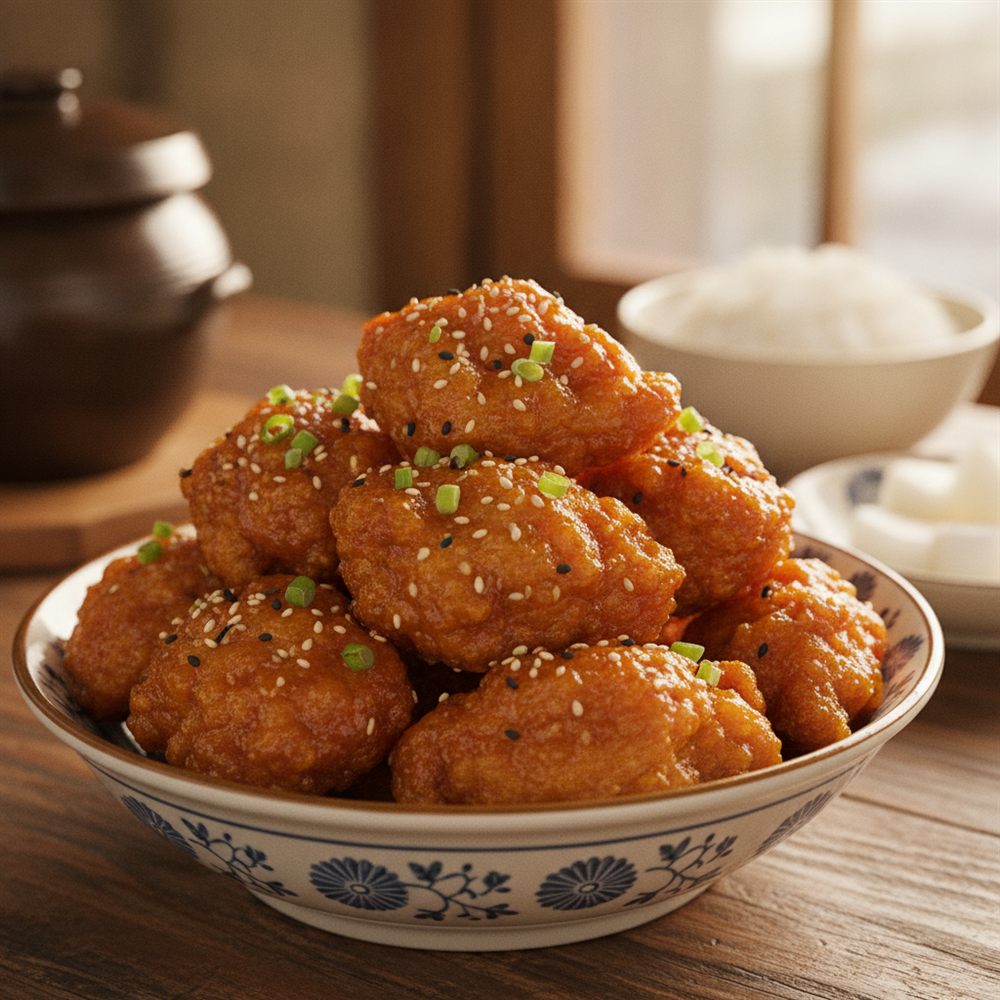
Small, extra-crunchy boneless chicken bites in a sticky sweet (sometimes spicy) glaze — market street food you eat with toothpicks.
Similar to: Like popcorn chicken or chicken nuggets crossed with sticky sesame chicken — bite-size, glazed, and made for snacking. If American mall food-court "honey sesame boneless bites" had a crunchier, less greasy Korean market cousin, this is it.
KFG Score
How we rate →Dakgangjeong appears in these rankings
The bottom line on Dakgangjeong
For a first Korean chicken, dakgangjeong is the easiest pick — small, boneless, sweet, and eaten off a toothpick, with barely any heat in the default glaze. People assume all Korean fried chicken is spicy, but this reads more like savory candy; only the maeun (spicy) version bites, and you order that on purpose.
Buy it fresh from a traditional market stall where they fry it in big batches — Sokcho's is especially famous — and because it holds its crunch far longer than regular fried chicken, it is a great grab-and-go or take-home snack.
Want to try Dakgangjeong?
Find Korean restaurants near you on Google Maps — see who serves it, with hours and reviews.
Affiliate link — we may earn a commission at no extra cost to you.
What is Dakgangjeong?
Dakgangjeong is bite-size Korean fried chicken with an even crunchier crust and a thick, sticky glaze. "Dak" means chicken and "gangjeong" refers to a traditional sweet, glazed crunchy snack — so the name literally frames it as a candied, crunchy chicken. The pieces are cut small (usually boneless, sometimes with tiny bones) and often fried harder or with a starchier coating so they stay crackly-crunchy even after being coated in the sticky sauce. It is a hugely popular market and street-food item; you will see big trays of it glistening at traditional markets and pojangmacha (street stalls), sold by the cup or box and eaten with toothpicks. Some regions are famous for it — Sokcho's market dakgangjeong is a well-known example that tourists line up for.
What does it taste like?
Sweet, sticky, garlicky, and intensely crunchy. The glaze is glossier and clingier than the sauce on yangnyeom chicken, and the pieces stay crisp under it longer because the coating is thicker and the pieces are small. Nutty notes from the sesame seeds and sometimes chopped peanuts on top round it out. It reads almost like candy — savory chicken candy — which is exactly why it is so snackable.
🌶️ Heat: Usually barely spicy or not spicy at all — the default is sweet and garlicky. Some shops offer a spicy (maeun) glaze with more gochujang or chili, which bumps it up, but the standard version is kid-friendly. If you want the spicy kind, ask specifically.
🧾 Key ingredients
- Small boneless chicken pieces
- Potato/corn starch coating (for extra crunch)
- Soy sauce, garlic, and corn syrup or sugar glaze
- Sometimes gochujang for a spicy version
- Toasted sesame seeds and chopped peanuts on top
🥗 Dietary notes
Not vegetarian. The coating is starch- and/or wheat-based and the glaze uses soy sauce, so it is generally not gluten-free. Frequently topped with peanuts, so ask if you have a nut allergy. Typically dairy-free but high in sugar.
To cook Dakgangjeong at home you need
The rest is fresh produce you can buy anywhere. These are the Korean staples — buy once, and they keep.
The full Korean pantry, ranked by what each staple unlocks →
How to eat Dakgangjeong
Grab it with the toothpicks it comes with and eat it as a walking snack or a shareable box. It travels and holds its crunch better than regular fried chicken, so it is also popular as a take-home or gift-box item. No beer required, though it works with it too — this one is just as much a market snack as it is drinking food.
🍜 Common variations
- Sweet soy-garlic glaze (the classic)
- Spicy (maeun) gochujang glaze
- Peanut-topped market style (Sokcho-famous)
- Boneless vs. tiny bone-in versions
- Mixed sweet-and-spicy trays
💡 Insider tips
- This is the easiest Korean chicken for beginners — small, boneless, sweet, and eaten with a toothpick.
- Buy it at a traditional market where they fry it in big batches; the freshness and crunch are noticeably better.
- It keeps its crunch longer than regular fried chicken, so it is a great pick if you are eating on the go or taking it back to your hotel.
- Watch for peanuts on top if you have a nut allergy — they are a common garnish.
- Get a mix of sweet and spicy if the stall offers it, so you can compare.
Dakgangjeong — FAQ
+ − What is the difference between dakgangjeong and yangnyeom chicken?
Both are glazed Korean fried chicken, but dakgangjeong is cut into small bite-size pieces, usually boneless, with an extra-crunchy coating and a thicker, stickier glaze. Yangnyeom is normal-size fried chicken pieces in a saucier red coating. Dakgangjeong is more of a snack; yangnyeom is more of a meal.
+ − Is dakgangjeong spicy?
Usually not. The default glaze is sweet and garlicky. Some shops sell a spicy gochujang version, but you would order that on purpose.
+ − Why is it so much crunchier than other fried chicken?
The pieces are small and often coated in extra starch and fried hard, so more surface stays crackly. The thick glaze also sets around the crunchy shell instead of soaking into it.
+ − Where do I find the best dakgangjeong?
Traditional markets and street stalls are the classic spots. The market in Sokcho is especially famous for its dakgangjeong and draws lines of visitors.
Sources & further reading
Written from first-hand experience. Recipes and spice levels vary by cook, region, and restaurant. If you have food allergies, always confirm the exact ingredients before you eat.