Triangle Kimbap + Cup Ramyeon삼각김밥 + 컵라면
Rice Triangle with Instant Ramen
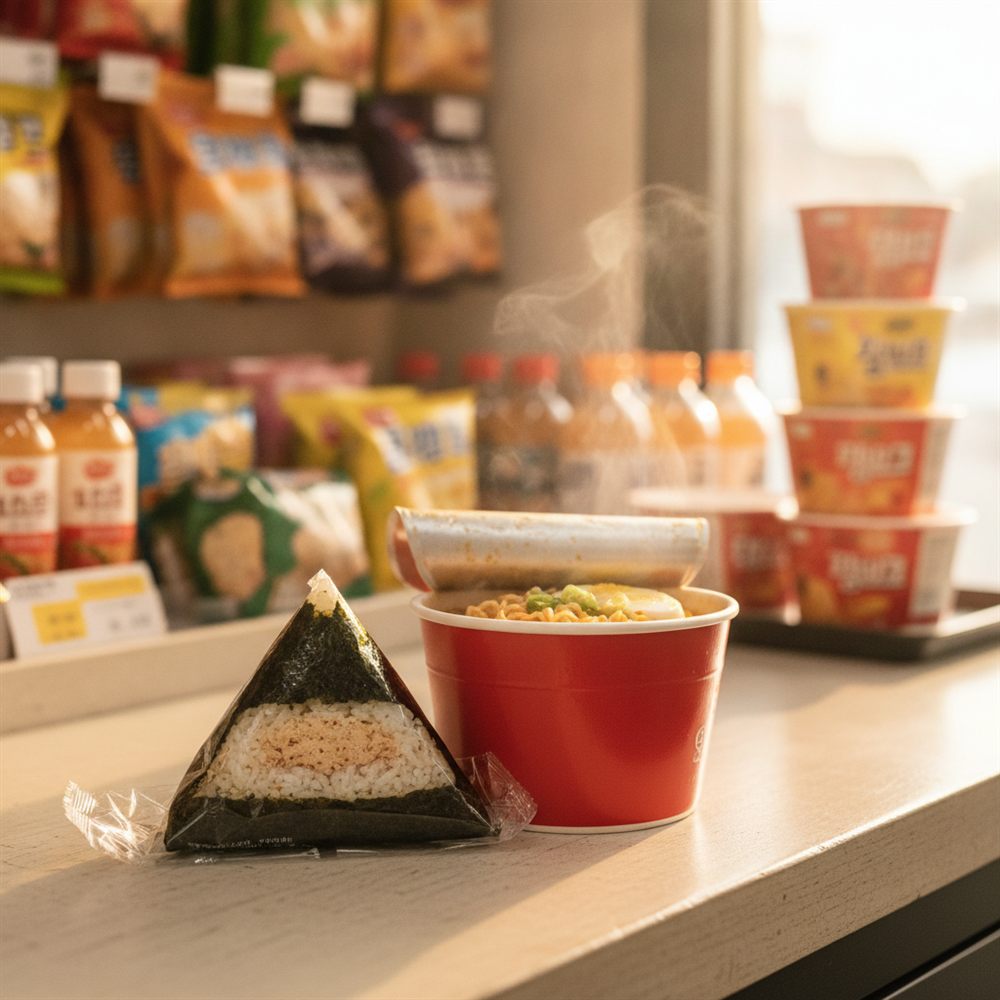
The #1 Korean convenience-store combo: a tuna-mayo rice triangle eaten alongside a steaming cup of instant ramyeon. Cheap, fast, and the unofficial meal of every broke Korean student. The pro move is crumbling the kimbap into the leftover broth at the end.
Similar to: Think of it like pairing a gas-station cup of instant noodles with a grab-and-go sushi hand roll or a deli sandwich. It is the Korean equivalent of ramen-plus-onigiri that you might know from Japanese convenience stores, but louder and spicier, and with that signature move of dumping the rice into the broth at the end like a cheap, glorious congee.
KFG Score
How we rate →Triangle Kimbap + Cup Ramyeon appears in these rankings
The bottom line on Triangle Kimbap + Cup Ramyeon
If you are new to Korean food, this combo is an easy yes. The tuna-mayo triangle is not spicy at all and cools you between noodle bites, so the only heat is whatever ramyeon you pick. For us in Korea this is not fancy food, it is the humble late-night meal every student grew up eating over a counter.
The move nobody skips: when only broth is left, crumble the last of the rice triangle into it, stir, and eat it like a quick porridge. Start with tuna-mayo and take your time with those numbered tabs.
Want to try Triangle Kimbap + Cup Ramyeon?
Find Korean restaurants near you on Google Maps — see who serves it, with hours and reviews.
Affiliate link — we may earn a commission at no extra cost to you.
What is Triangle Kimbap + Cup Ramyeon?
This is not a fancy dish. It is the meal every Korean has eaten hunched over a plastic counter at a GS25, CU, or 7-Eleven, usually late at night or between classes. A samgak-gimbap ('triangle kimbap') is a palm-sized triangle of seasoned rice with a filling in the middle, wrapped in seaweed with clever plastic packaging that keeps the nori crispy until you open it. The classic filling is tuna-mayo (chamchi-mayo), but there are dozens: bulgogi, spicy pork, kimchi, spam. You pair it with a cup of instant ramyeon that you fill with hot water from the machine every convenience store has. For maybe 3,000 to 4,000 won total, you get a hot, salty, filling meal in three minutes. For single-person households and students living on a budget, this combo basically is dinner. It is humble, it is a little sad, and every Korean has deep affection for it.
What does it taste like?
It is all about contrast. The ramyeon is hot, salty, and slurpable; the rice triangle is cool, chewy, and savory with a creamy tuna-mayo center. You alternate bites: a mouthful of noodles, then a bite of kimbap, then noodles again. The seaweed adds a toasty ocean note, the mayo adds richness, and the broth ties it all together. It is not sophisticated, but the rhythm of it is deeply satisfying.
🌶️ Heat: The heat comes entirely from which ramyeon you pick. A cup of Shin Ramyun lands around a 3 out of 5 for most people, with a real building burn. The tuna-mayo rice triangle itself is not spicy at all, so it doubles as a cooldown between spicy noodle bites. Choose a mild ramyeon and the whole combo drops to nearly zero heat.
🎬 Triangle Kimbap + Cup Ramyeon in K-dramas & K-pop
This combo blew up on Korean food social media.
- YouTube & TikTok convenience-store mukbang — Korean creators built an entire genre around 'pyeonuijeom kkul-jjohap' (convenience-store golden combos), filming themselves assembling triangle kimbap and cup ramyeon under the store's fluorescent lights. Foreign travelers now treat recreating this exact combo as a bucket-list Korea moment, and the satisfying rice-into-broth final bite is a reliable viral clip.▶ Watch on YouTube
- The infamous plastic-wrapper opening challenge — Half the videos are just people struggling to peel the numbered tabs of the triangle kimbap without shredding the seaweed. It became a running joke and a mini test of whether you are a 'real' convenience-store veteran.▶ Watch on YouTube
Scenes are described for reference only; we do not host any clips or images.
🧾 Key ingredients
- Samgak-gimbap (triangle kimbap), tuna-mayo the classic choice
- Cup ramyeon (Shin Ramyun cup is the standard)
- Hot water from the store dispenser
- Seasoned rice and roasted seaweed (nori)
- Optional add-ons: string cheese, a boiled egg from the counter
🥗 Dietary notes
Most classic fillings (tuna-mayo, bulgogi, spicy pork, spam) contain fish or meat, and standard ramyeon soup powder usually contains beef or seafood extract. Vegetarians can look for a plain vegetable or kimchi rice triangle plus a veggie-based ramyeon, but options are limited. Contains gluten (wheat noodles) and, in the tuna version, fish and egg.
To cook Triangle Kimbap + Cup Ramyeon at home you need
The rest is fresh produce you can buy anywhere. These are the Korean staples — buy once, and they keep.
The full Korean pantry, ranked by what each staple unlocks →
How to eat Triangle Kimbap + Cup Ramyeon
Step 1: Peel the cup ramyeon lid halfway back, add hot water to the fill line, close the lid, and wait 3 to 4 minutes. Step 2: While it cooks, open the triangle kimbap by pulling the numbered plastic tabs in order (1, 2, 3) so the seaweed wraps the rice without tearing. This is a rite of passage and everyone fails it the first time. Step 3: Once the ramyeon is ready, alternate bites: noodles, then kimbap, then noodles. Step 4 (the real move): when only broth is left, crumble the last of the rice triangle straight into the hot soup, stir, and eat it like a quick rice porridge. That final soggy-rice-in-broth bite is the whole reason Koreans love this combo.
🍜 Common variations
- Spicy pork or bulgogi kimbap instead of tuna-mayo
- Shin Ramyun swapped for a milder cup like Yukgaejang or a cheesier one
- Add a store-counter boiled egg or a slice of cheese into the ramyeon
- Two rice triangles for a bigger appetite (still under 6,000 won)
- Kimchi rice triangle for extra tang
💡 Insider tips
- Open the kimbap by pulling tab 1 to remove the center strip first, then tabs 2 and 3 to peel each side. Go slow the first time.
- Save the last bite of rice triangle to crumble into the leftover broth. This is the signature finish and non-negotiable for Koreans.
- Buy the rice triangle and ramyeon at the same store so you can use the free hot-water machine and eating counter.
- Tuna-mayo is the safest first pick, mild and creamy. Work up to spicy pork once you know your heat tolerance.
- Do not microwave the triangle kimbap for too long or the mayo gets weird. A quick 20-second warm is plenty, or eat it cold.
Triangle Kimbap + Cup Ramyeon — FAQ
+ − Why put the rice into the ramyeon broth at the end?
Because that leftover spicy, salty broth is too good to waste. Crumbling the seasoned rice into it makes an instant quick porridge, so you finish the whole meal with nothing left over. It is the classic ending every Korean does automatically.
+ − How much does this combo cost?
Roughly 3,000 to 4,000 won total (about 2 to 3 US dollars): around 1,000 to 1,500 won for the rice triangle and 1,500 to 2,500 won for the cup ramyeon. That budget price is exactly why students and single-person households live on it.
+ − Which triangle kimbap filling should I get?
Tuna-mayo (chamchi-mayo) is the all-time bestseller and the safest starting point. If you want something meatier, try bulgogi or spicy pork. Kimchi is great if you like extra tang.
+ − Can I eat it right there in the store?
Yes. Korean convenience stores have a counter or small tables, a microwave, and a hot-water dispenser specifically so you can assemble and eat this combo on the spot. That is completely normal and expected.
Sources & further reading
Written from first-hand experience. Recipes and spice levels vary by cook, region, and restaurant. If you have food allergies, always confirm the exact ingredients before you eat.