Doenjang-jjigae된장찌개
Soybean Paste Stew
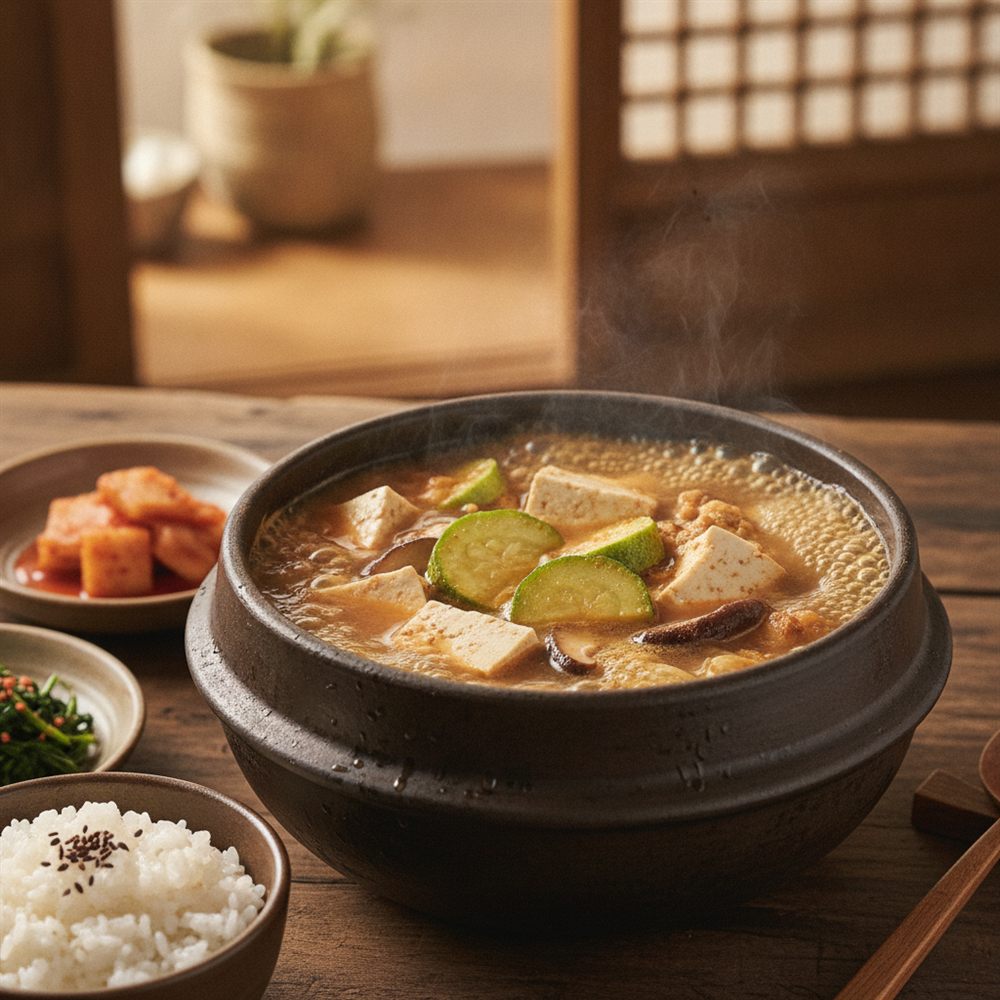
An earthy, savory everyday stew built on fermented soybean paste — the humble, homey backbone of a Korean home-cooked meal.
Similar to: It is Korea's answer to Japanese miso soup, but heartier and bolder — closer to a rustic, chunky vegetable-and-bean stew than a delicate broth. Imagine miso soup that grew up into a full, thick stew you eat with rice.
KFG Score
How we rate →Doenjang-jjigae appears in these rankings
The bottom line on Doenjang-jjigae
If you want the safest stew on a Korean menu, this is it — barely a 1 out of 5 for spice and pure earthy comfort. Just do not expect Japanese miso soup: Korean doenjang is bolder, saltier, and funkier, and its fermented aroma can take a bite to win you over.
For us it is the taste of home, the stew a Korean mom makes on a random Tuesday. The classic move is to order it as the finisher after Korean BBQ — a bowl of it rounds out a grilled-meat meal beautifully.
Want to try Doenjang-jjigae?
Find Korean restaurants near you on Google Maps — see who serves it, with hours and reviews.
Affiliate link — we may earn a commission at no extra cost to you.
What is Doenjang-jjigae?
If kimchi-jjigae is the exciting comfort food, doenjang-jjigae is the quiet, everyday one — the stew that says home more than any other dish for most Koreans. It is built on doenjang, a thick fermented soybean paste that is the Korean cousin of Japanese miso. But here is what surprises people: Korean doenjang is much bolder, saltier, and funkier than the mild miso in Japanese miso soup. It has a deep, almost pungent fermented aroma that some foreigners need a bite or two to appreciate, and then cannot stop eating. You dissolve a spoonful of doenjang into water or an anchovy-and-kelp broth, then simmer it with tofu, zucchini (Korean squash), potato, onion, mushrooms, and often a little chili pepper. It is the stew a Korean mom makes on a random Tuesday, and it turns a plate of rice into a real meal.
What does it taste like?
Deeply earthy, salty, and rich with fermented umami. It tastes savory and grounding rather than sharp — nutty and slightly funky from the soybean paste, with soft vegetables that soak up the broth. It is the definition of savory comfort, not flashy but endlessly satisfying.
🌶️ Heat: Barely spicy at all. The base is not a chili dish — any heat comes from a few slices of green or red chili pepper that some cooks toss in, and that is easy to leave out. If you are avoiding spice entirely, this is one of the safest stews on a Korean menu.
🎬 Doenjang-jjigae in K-dramas & K-pop
The most everyday of stews is also one of the most-seen home meals in Korean drama.
- Family dinner scenes — A pot of doenjang-jjigae in the middle of the table is shorthand for an ordinary, comforting family dinner at home.▶ Watch on YouTube
Scenes are described for reference only; we do not host any clips or images.
🧾 Key ingredients
- Doenjang (fermented soybean paste)
- Tofu
- Korean zucchini (aehobak) or regular zucchini
- Potato and onion
- Anchovy-and-kelp broth
- Mushrooms and green chili pepper
🥗 Dietary notes
The paste itself is plant-based, but the broth is traditionally made with dried anchovies and kelp, and many versions include a little beef, pork, or clams — so it is usually not vegetarian by default. A vegetable-and-kelp broth version is genuinely vegetarian/vegan and not hard to make at home. Doenjang is soy-based; it is usually gluten-free, but check the specific paste, since some brands blend in wheat.
To cook Doenjang-jjigae at home you need
The rest is fresh produce you can buy anywhere. These are the Korean staples — buy once, and they keep.
The full Korean pantry, ranked by what each staple unlocks →
How to eat Doenjang-jjigae
Served bubbling in a small shared earthenware pot alongside individual bowls of plain rice and a few side dishes. Spoon the stew over rice or eat it alongside, scooping up tofu and vegetables as you go. It pairs beautifully with grilled meat (gogi-gui) — a bowl of doenjang-jjigae is the classic finisher after a Korean BBQ.
🍜 Common variations
- With clams or shrimp for a seafood-forward, brinier version
- With beef or pork for extra richness
- Ssamjang-adjacent home versions thickened with extra paste
- Vegetarian version with a pure kelp-and-mushroom broth
💡 Insider tips
- Do not confuse it with Japanese miso soup — Korean doenjang is far stronger and funkier, so a little paste goes a long way.
- An anchovy-and-kelp broth (or a vegetarian kelp-mushroom broth) makes it taste far deeper than plain water.
- It is the traditional companion to Korean BBQ — order it to round out a grilled-meat meal.
- Do not over-boil after adding the paste; a gentle simmer keeps the flavor clean rather than harsh.
Doenjang-jjigae — FAQ
+ − Is doenjang-jjigae the same as miso soup?
They are cousins, not twins. Both are built on fermented soybean paste, but Korean doenjang is bolder, saltier, and funkier than Japanese miso, and doenjang-jjigae is a thick, chunky stew eaten with rice rather than a light sipping soup.
+ − Is it spicy?
Not really — it is a 1 out of 5 at most. The dish is about earthy fermented flavor, not chili. Any mild heat comes from a few optional slices of chili pepper.
+ − Can vegetarians eat it?
Sometimes. The paste is plant-based, but the standard broth uses dried anchovies and some versions add beef, pork, or clams. Ask for a version made with a kelp-and-vegetable broth, or make it at home for a genuinely vegetarian bowl.
+ − Why does it smell so strong?
That aroma is the fermented soybean paste doing its job. It can seem intense at first, but that funk is exactly what gives the stew its deep, savory character — most people grow to love it fast.
Sources & further reading
Written from first-hand experience. Recipes and spice levels vary by cook, region, and restaurant. If you have food allergies, always confirm the exact ingredients before you eat.