Seolleongtang설렁탕
Milky Ox Bone Soup
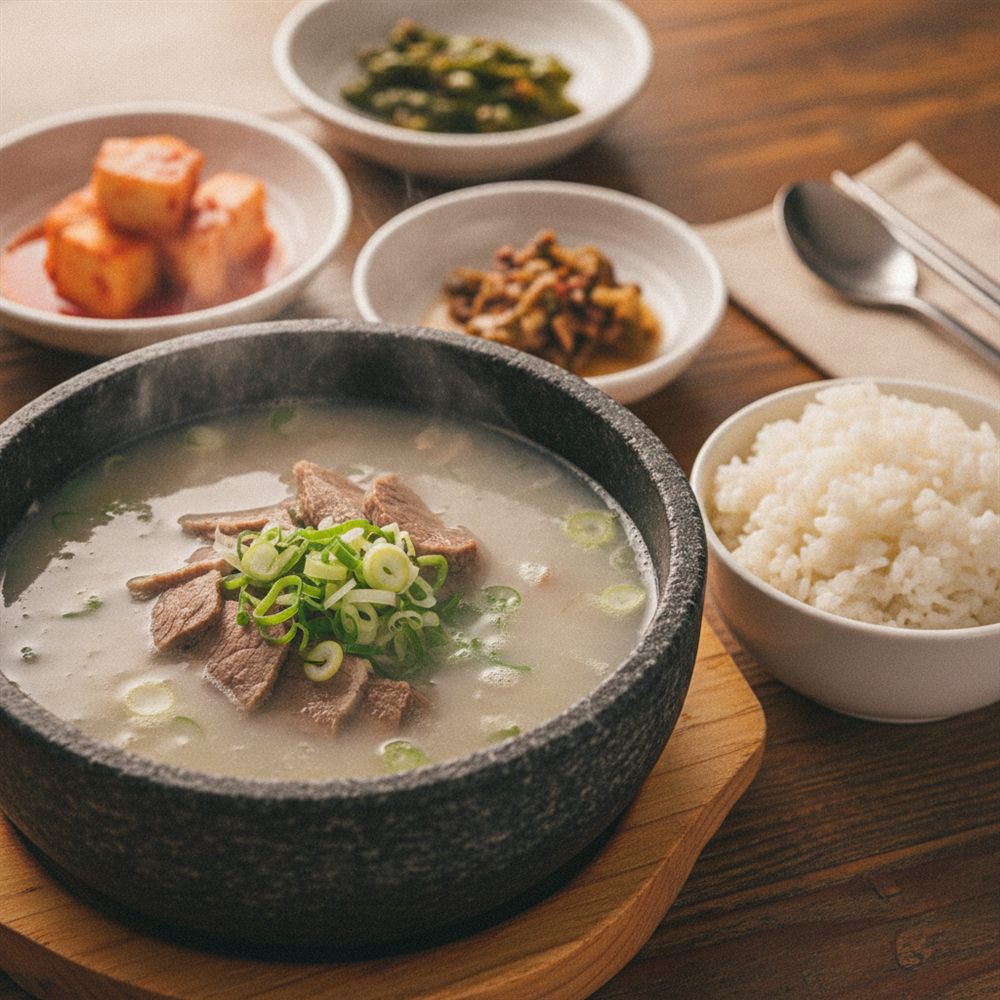
A cloudy-white ox-bone broth simmered for many hours, served plain with rice and noodles so you can season it exactly to your taste — one of the gentlest, most comforting Korean soups.
Similar to: Imagine a very long-simmered beef bone broth — like a Vietnamese pho broth but milky-white and served unseasoned, or a French pot-au-feu broth — that you finish salting yourself, poured over rice and noodles.
KFG Score
How we rate →Seolleongtang appears in these rankings
The bottom line on Seolleongtang
Seolleongtang is completely non-spicy and one of the safest choices on any menu if you cannot handle heat — a soothing, restorative bowl rather than a bold one. The thing beginners get wrong is thinking the kitchen forgot to season it: it arrives deliberately plain so you can finish it yourself. And despite the milky look there is no dairy at all — that white color is pure bone collagen from many hours of simmering.
Add salt and the chopped green onion gradually until the flavor comes alive, and try stirring in a spoonful of the kkakdugi radish kimchi brine, which many of us swear by. Eat the rice and noodles right out of the broth — it is a great pick for a cold day or a hangover.
Want to try Seolleongtang?
Find Korean restaurants near you on Google Maps — see who serves it, with hours and reviews.
Affiliate link — we may earn a commission at no extra cost to you.
What is Seolleongtang?
Seolleongtang is made by boiling beef bones — leg bones, ox tail, and brisket — for a very long time, sometimes a full day, until the water turns milky, opaque, and white from all the dissolved collagen and marrow. The result is a clean, nourishing broth that arrives at the table almost unseasoned, usually with rice and thin somyeon noodles already in the bowl. It is old, humble Seoul food: the kind of thing you eat on a cold day or when you want something restorative and easy. Because it is so plainly flavored, you finish it yourself at the table with salt and chopped green onion until it tastes right to you.
What does it taste like?
Mild, milky, and deeply savory in a quiet way — this is not a bold or spicy soup, it is a soothing one. On its own the broth is almost blank, with a soft, rich, beefy warmth that comes through more as you add salt. The texture is silky from all the collagen, and with rice and noodles stirred in it becomes a gentle, filling one-bowl meal. Think of it as a blank, comforting canvas rather than a punchy dish.
🌶️ Heat: Seolleongtang is completely non-spicy — it is one of the safest choices on any menu if you cannot handle heat. The only spice comes from the kkakdugi (cubed radish kimchi) usually served alongside, which you can eat or skip.
🧾 Key ingredients
- Beef bones (leg bone, ox tail)
- Beef brisket or other beef cuts
- Water (long simmered)
- Somyeon (thin wheat noodles)
- Rice
- Salt and chopped green onion (added at the table)
🥗 Dietary notes
Seolleongtang is a beef-bone soup, so it is not vegetarian or vegan. The thin noodles inside are wheat, so the standard bowl is not gluten-free (you could ask for it without noodles, but the broth is still the point). It is dairy-free despite the milky look — the whiteness comes entirely from bone collagen, not milk. It is high in protein and collagen, which is part of its reputation as restorative food.
How to eat Seolleongtang
The key thing beginners miss: it is meant to be seasoned by you. When it arrives, add salt and the chopped green onion to taste, stir, and adjust — do not assume the kitchen 'forgot' to season it. Many people also stir in a spoonful of the kkakdugi radish kimchi brine for extra flavor and tang. Eat the rice and noodles right out of the broth. It is a warming, unpretentious meal, great for breakfast, a hangover, or a cold day.
🍜 Common variations
- Gomtang (a closely related beef soup, often clearer and made with more meat than bone)
- Kkori-gomtang (oxtail soup)
- Doganitang (made with beef knee cartilage, extra collagen-rich)
💡 Insider tips
- Season it yourself — add salt and green onion gradually until the flavor comes alive. This is the single most important tip.
- Try a spoonful of the kkakdugi (radish kimchi) brine stirred into the broth; many Koreans swear by it.
- It is a great pick if you are spice-averse or feeling under the weather — gentle, warm, and filling.
- The kkakdugi on the side is spicy and crunchy; eat it in small bites between spoonfuls for contrast.
- If you want a similar but meatier soup, order gomtang next time.
Seolleongtang — FAQ
+ − Why does seolleongtang look milky? Is there milk in it?
There is no milk. The cloudy white color comes from beef bones being boiled for many hours, which releases collagen and marrow that emulsify into the broth. It is completely dairy-free.
+ − Why does it taste bland when it arrives?
It is served deliberately under-seasoned so you can salt it to your own taste. Add salt and green onion at the table and it transforms into a rich, savory soup.
+ − Is seolleongtang spicy?
Not at all. It is one of the mildest Korean soups. Only the radish kimchi served on the side is spicy, and that is optional.
+ − What is the difference between seolleongtang and gomtang?
Both are long-simmered beef soups. Seolleongtang uses a lot of bone, giving it that milky, collagen-rich broth, while gomtang tends to use more meat and has a clearer, cleaner broth.
Sources & further reading
Written from first-hand experience. Recipes and spice levels vary by cook, region, and restaurant. If you have food allergies, always confirm the exact ingredients before you eat.