Samgyetang삼계탕
Ginseng Chicken Soup
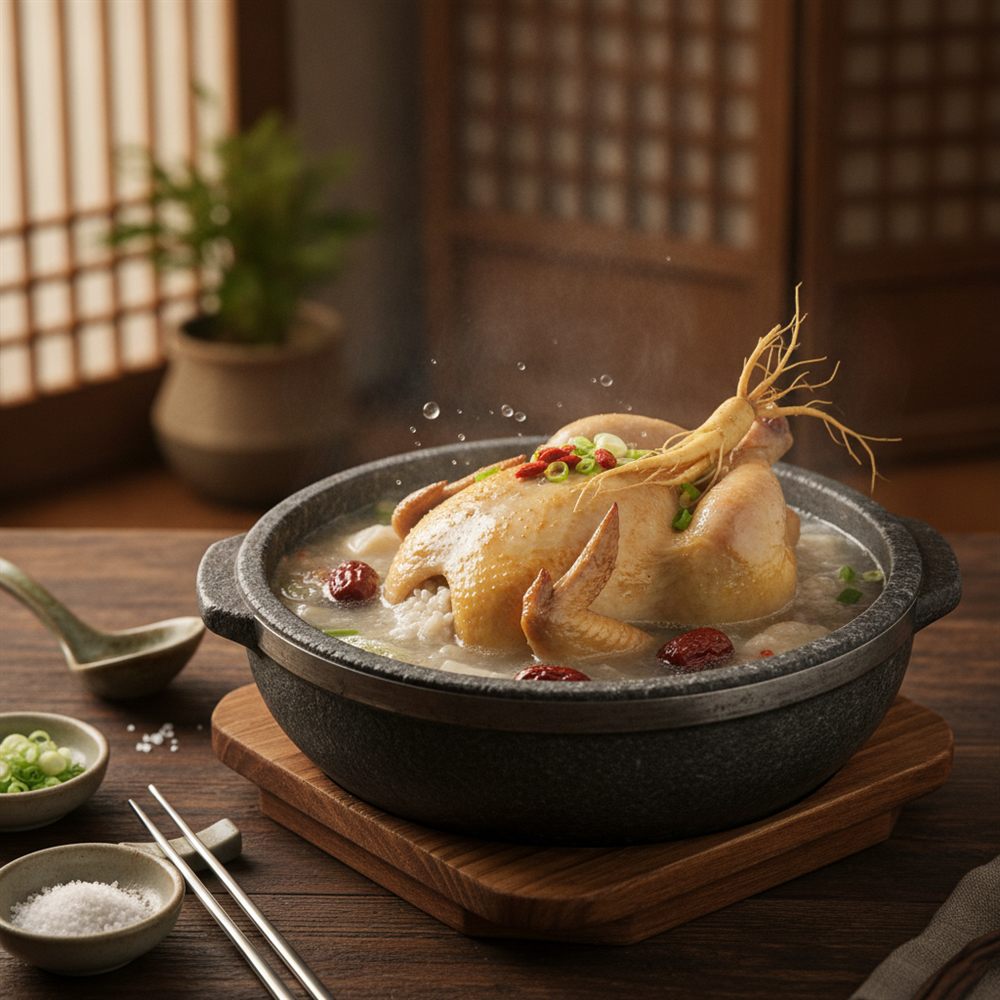
A whole young chicken stuffed with rice, ginseng, garlic, and jujube, simmered into a milky, nourishing broth — Korea's classic summer stamina food.
Similar to: It is Korea's version of the universal get-well chicken soup — much like a grandmother's whole-chicken-and-rice soup meant to nurse you back to health, but built around a whole small bird stuffed with rice and boosted with ginseng and jujube.
KFG Score
How we rate →Samgyetang appears in these rankings
The bottom line on Samgyetang
Samgyetang confuses first-timers more than any dish — it is a hot chicken soup Koreans eat in the peak of summer, on the idea of fighting heat with heat. Do not worry about spice: it is a true zero with no chili, one of the most beginner-safe things on any Korean menu.
It arrives almost unsalted on purpose, so season the broth yourself with the salt and pepper provided. And do not skip the softened ginseng, garlic, and jujube inside — eating them is the whole nourishing point of the dish.
Want to try Samgyetang?
Find Korean restaurants near you on Google Maps — see who serves it, with hours and reviews.
Affiliate link — we may earn a commission at no extra cost to you.
What is Samgyetang?
Samgyetang is the dish that confuses first-time visitors the most: it is a hot, steaming chicken soup that Koreans eat specifically in the peak of summer. The logic is a traditional idea called iyeol-chiyeol — fighting heat with heat — the belief that a nourishing hot soup restores energy lost to sweaty summer days. It is a tang, meaning a soup rather than a thick stew, and it is one of the gentlest, most soothing dishes in Korean cuisine. A whole young chicken is stuffed with glutinous (sticky) rice, then simmered for a long time with Korean ginseng root, whole garlic cloves, jujube (Korean red dates), and sometimes chestnut. The result is a cloudy, milky-looking broth and meat so tender it slips off the bone. You get your own whole small bird in your own bowl. It is comfort and medicine at once — the food Koreans eat to recover.
What does it taste like?
Clean, mild, and deeply soothing. The broth is savory and lightly herbal from the ginseng, with a subtle earthy-bitter note and a warm garlic aroma. The chicken is fall-apart tender and the rice inside turns soft and porridge-like. It tastes wholesome and restorative rather than bold — you salt it yourself to taste.
🌶️ Heat: Not spicy at all — a true zero. There is no chili anywhere in the dish. It arrives deliberately under-seasoned, and you add salt (and often black pepper) yourself at the table. This makes it one of the most beginner-safe dishes on any Korean menu.
🧾 Key ingredients
- Whole young chicken (poussin)
- Glutinous (sweet) rice stuffing
- Korean ginseng root
- Whole garlic cloves
- Jujube (Korean red dates)
- Chestnut (in many versions)
🥗 Dietary notes
It is a whole-chicken dish, so it is firmly not vegetarian or vegan. The broth and rice stuffing are naturally gluten-free, which makes it a good choice for people avoiding wheat. Because it is served nearly unsalted, it also suits those who want to control their own sodium.
How to eat Samgyetang
You get your own bowl with a whole small chicken in clear broth, served with small dishes of salt and pepper. Season the broth to taste, then use your spoon and chopsticks to pull the tender meat off the bones and scoop out the rice from inside the bird. Eat the ginseng, garlic, and jujube too — they are the nourishing point of the dish. A small cup of insam-ju (ginseng liquor) sometimes comes alongside.
🍜 Common variations
- Ogolgyetang — made with black-boned silkie chicken, considered extra nourishing
- Jeonbok-samgyetang — with abalone added to the broth
- Deulkkae (perilla seed) samgyetang — with a nutty ground-perilla broth
- Half-chicken (ban-gyetang) portions for lighter appetites
💡 Insider tips
- Season it yourself — it arrives almost unsalted on purpose, so add the provided salt and pepper to your broth gradually.
- Do not skip the softened garlic, ginseng, and jujube; eating them is the whole nourishing idea of the dish.
- Try it in summer for the full cultural experience — Koreans line up for it on the hottest days of the year.
- It is a filling, wholesome one-bowl meal, so come hungry and take your time pulling the meat off the bone.
Samgyetang — FAQ
+ − Why do Koreans eat hot chicken soup in summer?
It comes from the idea of fighting heat with heat (iyeol-chiyeol) — the belief that a hot, nourishing soup replenishes the energy and nutrients lost through summer sweating. It is traditionally eaten on the three hottest days of the year, called boknal.
+ − Is samgyetang spicy?
Not at all — it is a genuine 0 out of 5 with no chili. It is served lightly seasoned so you can add salt and pepper yourself, which makes it one of the most approachable Korean dishes for people who avoid spice.
+ − Do I eat the whole chicken myself?
Yes — each person typically gets their own whole young chicken in their own bowl. The meat is simmered until it falls off the bone, and the rice stuffing inside softens into a porridge-like filling you scoop out and eat.
+ − Can I eat the ginseng and garlic?
Absolutely — that is the point. The ginseng root, softened garlic cloves, and jujube dates are meant to be eaten and are considered the nourishing heart of the dish.
Sources & further reading
Written from first-hand experience. Recipes and spice levels vary by cook, region, and restaurant. If you have food allergies, always confirm the exact ingredients before you eat.