Dolsot Bibimbap돌솥비빔밥
Sizzling Stone-Pot Mixed Rice
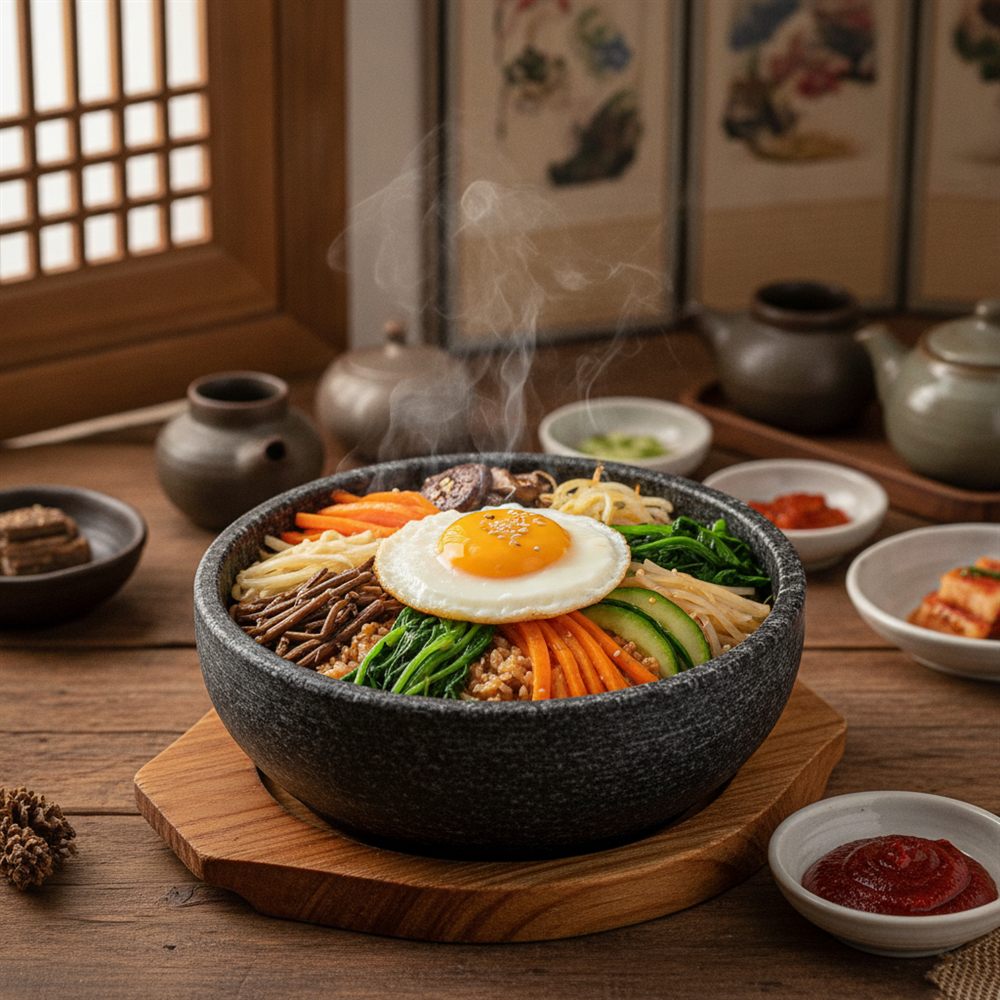
Bibimbap served in a screaming-hot stone bowl that toasts the bottom layer of rice into an addictive golden crust while you mix.
Similar to: Think of it as a warm, savory grain bowl — like a customizable Buddha bowl — but served in a sizzling cast-iron-hot stone that gives you a layer of crispy toasted rice, similar to the prized crunchy bottom (socarrat) of a good paella.
KFG Score
How we rate →Dolsot Bibimbap appears in these rankings
The bottom line on Dolsot Bibimbap
Dolsot Bibimbap is a great first Korean dish for a nervous eater: familiar ingredients, no strange textures, and spice that is entirely in your hands since the only heat comes from the gochujang you add yourself. The thing beginners underestimate is the stone bowl — it arrives almost dangerously hot and keeps sizzling at the table, which is exactly what toasts the bottom layer of rice into that golden crust.
Add gochujang gradually, then mix everything firmly and soon, pressing the rice against the hot sides so it crisps, and let it sit a moment before digging in. At the end, scrape up the crunchy nurungji at the bottom — for many of us that is the best bite of the meal.
Want to try Dolsot Bibimbap?
Find Korean restaurants near you on Google Maps — see who serves it, with hours and reviews.
Affiliate link — we may earn a commission at no extra cost to you.
What is Dolsot Bibimbap?
Dolsot bibimbap is the upgraded, theatrical cousin of regular bibimbap. 'Dolsot' means stone pot, and the dish arrives in a heavy granite bowl that has been heated until it is almost dangerously hot — so hot that the rice against the sides keeps sizzling at your table. Inside is the same beautiful arrangement as classic bibimbap: a bed of rice topped with neat piles of seasoned vegetables (namul), often some beef, and a fried or raw egg, with a dollop of gochujang on the side. The magic of the stone pot is that as you mix, the rice touching the hot stone crisps into nurungji — a crunchy, nutty, golden crust that is many Koreans' favorite part.
What does it taste like?
You get everything that makes bibimbap great — fresh, lightly seasoned vegetables, savory rice, the gentle warmth of gochujang, the richness of egg yolk — plus one extra dimension: contrast in texture. Most of the bowl is soft and comforting, but the crispy toasted rice at the bottom adds crunch and a deep, roasted, almost popcorn-like flavor. It is savory, balanced, and endlessly customizable in heat by how much gochujang you stir in.
🌶️ Heat: On its own the bowl is barely spicy — the heat comes entirely from the gochujang you add yourself. Add a little for a mild warmth, or leave it out for a completely non-spicy meal. You are fully in control.
🧾 Key ingredients
- Steamed rice
- Assorted seasoned vegetables (namul) — spinach, bean sprouts, carrot, zucchini, mushroom
- Egg (fried or raw)
- Beef (optional)
- Gochujang (Korean chili paste, served on the side)
- Sesame oil
- A hot stone bowl (dolsot)
🥗 Dietary notes
Dolsot bibimbap is one of the easiest Korean dishes to make vegetarian or vegan — just ask for it without meat and without egg. Most of the vegetables are seasoned with sesame oil, soy, and garlic. Be aware that gochujang often contains a little wheat (so it is not always gluten-free) and some kitchens season a namul or two with tiny amounts of fish products, so vegans should confirm. The dish is naturally dairy-free.
To cook Dolsot Bibimbap at home you need
The rest is fresh produce you can buy anywhere. These are the Korean staples — buy once, and they keep.
The full Korean pantry, ranked by what each staple unlocks →
How to eat Dolsot Bibimbap
This is the fun part. When it arrives, add as much gochujang as you like, then mix everything together thoroughly and firmly — you want the rice, vegetables, egg, and sauce fully combined, and you want to press the rice against the hot sides so it crisps. Then let it sit for a moment before digging in so the crust develops. Eat straight from the bowl; the stone keeps it hot to the last bite. There is no wrong ratio — mix to your taste.
🍜 Common variations
- Yukhoe bibimbap (topped with seasoned raw beef)
- Jeonju bibimbap (the famous, elaborate regional version)
- Vegetable-only (sesame) bibimbap
- Regular (non-stone-bowl) bibimbap for a softer texture
💡 Insider tips
- Mix it well and mix it soon — the whole point is to press the rice onto the hot stone so it forms the crispy crust before it cools.
- Add gochujang gradually; you can always stir in more, but you cannot take it out.
- The bowl stays scorching hot for a long time — do not touch the outside, and be careful with the metal.
- Scrape the golden crust off the bottom at the end; for many Koreans that nurungji is the best bite of the meal.
- It is a great first Korean dish for a nervous eater: familiar ingredients, adjustable spice, and no strange textures.
Dolsot Bibimbap — FAQ
+ − What is the difference between bibimbap and dolsot bibimbap?
They are the same dish, but dolsot bibimbap is served in a sizzling-hot stone bowl. That heat toasts the bottom layer of rice into a crispy, nutty crust and keeps the meal hot as you eat. Regular bibimbap is served in a normal bowl and stays soft throughout.
+ − Do I mix it myself?
Yes. Add gochujang to taste and stir everything together thoroughly before eating — mixing is part of the dish (bibim literally means 'mixed').
+ − Is dolsot bibimbap spicy?
Only as spicy as you make it. The heat comes from the gochujang you add, so you can keep it mild or skip it entirely.
+ − Can I make it vegetarian?
Easily — ask for no meat and no egg. It is one of the most vegetarian-friendly Korean restaurant dishes, though strict vegans should confirm the gochujang and vegetable seasonings.
Sources & further reading
Written from first-hand experience. Recipes and spice levels vary by cook, region, and restaurant. If you have food allergies, always confirm the exact ingredients before you eat.