Kimchi Fried Rice김치볶음밥
Kimchi Fried Rice
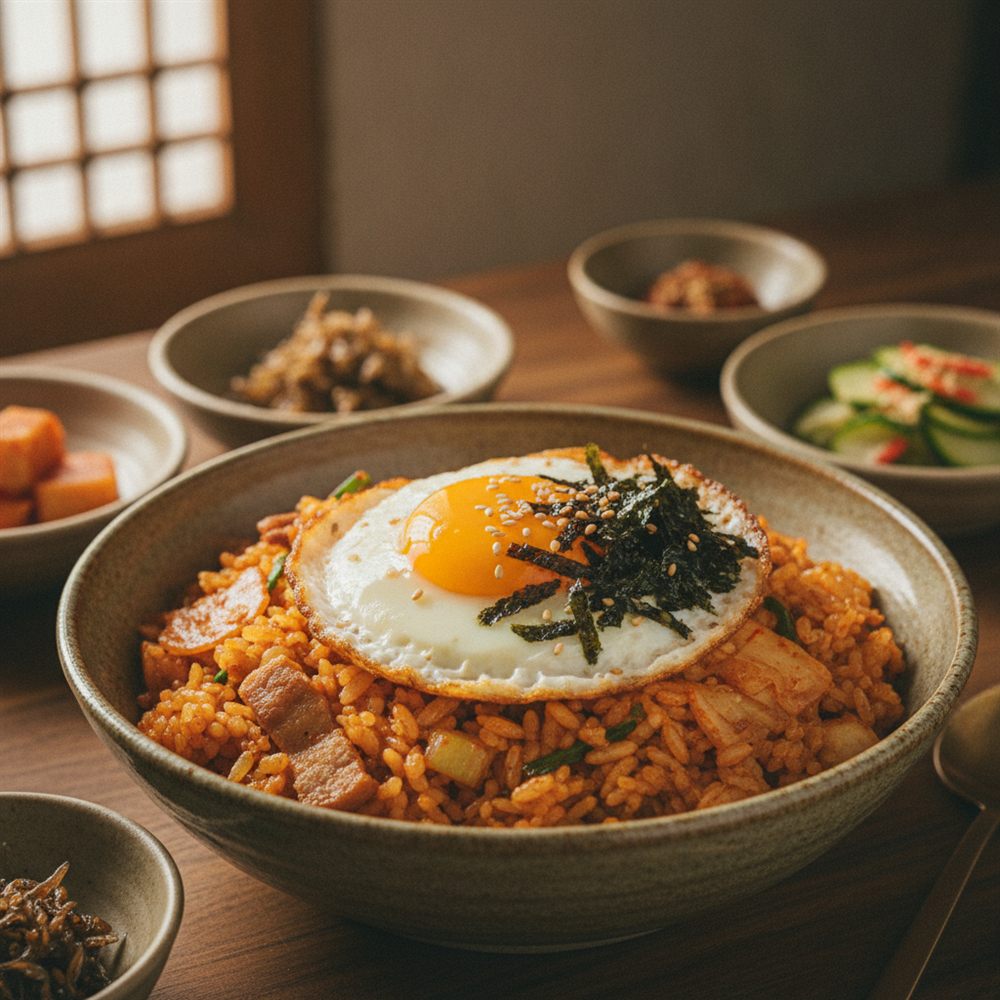
Rice stir-fried with chopped aged kimchi until savory and slightly caramelized, usually topped with a fried egg — the ultimate Korean comfort and leftover food.
Similar to: It is Korea's answer to fried rice — same idea as Chinese egg fried rice or a diner hash, but built around tangy fermented kimchi instead of soy sauce, and almost always topped with a fried egg like a rice version of a comfort-food scramble.
KFG Score
How we rate →The bottom line on Kimchi Fried Rice
Kimchi fried rice is one of the friendliest ways into Korean food — a familiar fried-rice format, only mildly spicy, and easy to customize. For us it is pure comfort, the number-one thing we make when there is old kimchi and leftover rice to use up.
Use the sourest, most fermented kimchi you have — it makes far tastier rice than fresh — and break the fried egg yolk into the rice so every bite is richer. If the tang is too much, melt some cheese on top; it is a popular move, not a cheat.
Want to try Kimchi Fried Rice?
Find Korean restaurants near you on Google Maps — see who serves it, with hours and reviews.
Affiliate link — we may earn a commission at no extra cost to you.
What is Kimchi Fried Rice?
Kimchi fried rice (kimchi-bokkeumbap) is exactly what it sounds like: cooked rice stir-fried in a pan with chopped kimchi. It is the classic Korean home dish and the number-one thing Koreans make when there is old kimchi in the fridge and leftover rice to use up. The kimchi is fried in a little oil (often with a spoon of its own juice and sometimes a bit of gochujang or gochugaru) until it loses its raw sharpness and turns sweet and savory, then the rice is tossed in and cooked until it soaks up all that flavor and gets a little toasty. It is almost always crowned with a fried egg, and often finished with sesame oil, sesame seeds, crumbled seaweed, and green onion. Bits of Spam, bacon, tuna, or pork are common add-ins. It is cheap, fast, deeply satisfying, and something nearly every Korean grew up eating.
What does it taste like?
Tangy, savory, and comforting with a gentle warmth. Aged kimchi gives it a sour-fermented depth that mellows and sweetens as it cooks, and the rice picks up a slightly caramelized, umami edge from the pan. The runny egg yolk on top makes it richer and rounder. It tastes like home food — unfussy and moreish rather than fancy.
🌶️ Heat: Mild to moderate. The heat depends on the kimchi and whether extra chili is added, but cooking the kimchi tames a lot of its bite, so it usually lands as a comfortable warm-tangy rather than truly hot. You can dial it down with more egg, cheese, or rice, or up with extra gochujang. Kids in Korea eat milder versions all the time.
🧾 Key ingredients
- Cooked rice (day-old is ideal)
- Well-fermented (sour) kimchi, chopped
- Cooking oil and a little kimchi juice
- Fried egg on top
- Optional Spam, bacon, tuna, or pork
- Sesame oil, sesame seeds, seaweed, green onion
🥗 Dietary notes
Can be vegetarian if made with vegan kimchi and no meat, but two things trip it up: most traditional kimchi is fermented with fish sauce or salted shrimp, and the dish is frequently made with Spam, bacon, or tuna. Ask about both. It is often gluten-free-ish but can contain soy sauce or gochujang (which usually has wheat), so confirm if that matters.
To cook Kimchi Fried Rice at home you need
The rest is fresh produce you can buy anywhere. These are the Korean staples — buy once, and they keep.
The full Korean pantry, ranked by what each staple unlocks →
How to eat Kimchi Fried Rice
Eat it straight from the plate or pan with a spoon. If it has a fried egg, break the yolk and mix it through so it coats the rice. It is a full one-dish meal on its own — no need to build anything — though a little extra kimchi or a light soup on the side is common. It is eaten any time: lunch, a quick dinner, or a late-night bite.
🍜 Common variations
- With Spam (a beloved classic combination)
- With tuna (chamchi) stirred in
- Cheese kimchi fried rice — melted cheese on top
- Pork kimchi fried rice
- Finished on a hot plate so the bottom rice crisps
💡 Insider tips
- Use the sourest, most fermented kimchi you have — older kimchi makes far tastier fried rice than fresh kimchi.
- Break the fried egg yolk into the rice and mix; it makes every bite richer.
- A splash of the kimchi brine while frying deepens the flavor more than adding salt.
- It is a friendly first Korean dish — familiar fried-rice format, only mildly spicy, and easy to customize.
- Add cheese on top if you want to mellow the tang and heat — a popular move, not a cheat.
Kimchi Fried Rice — FAQ
+ − Is kimchi fried rice very spicy?
Not usually. Cooking the kimchi softens its sharpness, so it comes out warm and tangy rather than fiery. The exact heat depends on the kimchi, and you can always add more or less chili.
+ − Can I make it vegetarian?
You can, but watch two things: most kimchi is fermented with fish sauce or shrimp, and the dish is often cooked with Spam, bacon, or tuna. Use vegan kimchi and skip the meat and it works.
+ − Why is old kimchi better than fresh for this?
Well-fermented, sour kimchi has a deeper, tangier flavor that turns wonderfully savory and slightly sweet when fried. Fresh kimchi tastes flat and crunchy by comparison, so Koreans specifically save aged kimchi for cooking.
+ − Why is there always an egg on top?
A fried egg is the traditional finish. The runny yolk mixed through the rice adds richness and rounds out the tang, and it makes an already comforting dish even more satisfying.
Sources & further reading
Written from first-hand experience. Recipes and spice levels vary by cook, region, and restaurant. If you have food allergies, always confirm the exact ingredients before you eat.