Juk죽
Korean Rice Porridge
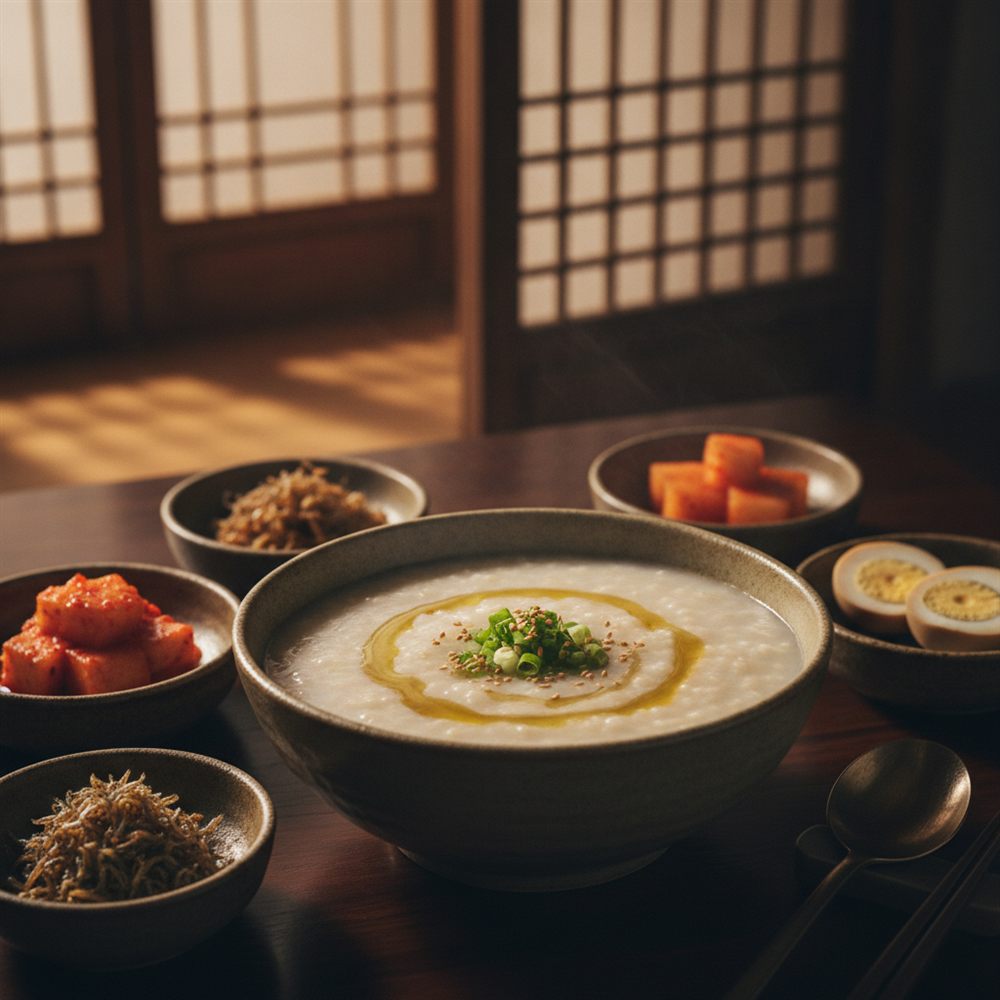
Slow-cooked savory rice porridge that Koreans turn to when they are sick, recovering, or just want something gentle and warming.
Similar to: Very close to Chinese congee or a savory rice porridge — think of a comforting, spoonable rice equivalent of oatmeal, or a loose, brothy risotto meant to soothe rather than impress.
KFG Score
How we rate →Juk appears in these rankings
The bottom line on Juk
If you are new to Korean food or have an upset stomach, Juk is the gentlest possible entry point — not spicy at all, mild and clean, and designed to be kind to your stomach. It holds a very specific place in Korean life: it is what your mother makes when you have a cold and what recovery meals are built around, so for us it tastes like being cared for. Just know most juk is savory, not a sweet breakfast porridge.
Season each spoonful to your taste with the small side dishes — seasoned seaweed, a little kimchi, or salted pollock — added in small bites for contrast. Try abalone juk (jeonbok-juk) once as a treat; it is the celebrated, restorative version and worth it.
Want to try Juk?
Find Korean restaurants near you on Google Maps — see who serves it, with hours and reviews.
Affiliate link — we may earn a commission at no extra cost to you.
What is Juk?
Juk is Korean rice porridge — rice simmered slowly in lots of water or broth until the grains break down into a soft, soothing, spoonable consistency. Unlike a sweet breakfast porridge, most juk is savory. It occupies a very specific emotional place in Korean life: it is what your mother makes when you have a cold, what you eat the morning after being sick, and what hospitals and recovery meals are built around because it is so easy to digest. There are also luxurious versions eaten as a treat, and whole restaurant chains devoted to it. It ranges from the plainest white-rice juk to rich versions loaded with abalone, chicken, mushrooms, or vegetables.
What does it taste like?
Comforting, mild, and clean. The base is subtly savory and nutty from the cooked rice, and the flavor depends on what goes in — abalone juk tastes gently of the sea, chicken juk is soothing and brothy, pumpkin juk (hobak-juk) is naturally a touch sweet. The texture is smooth and creamy without any cream, somewhere between a thin risotto and a thick soup. It is the opposite of a bold, spicy Korean dish — this is food designed to be kind to your stomach.
🌶️ Heat: Juk is not spicy at all — that is the whole point. It is usually served with a few small side dishes (like seasoned seaweed or a tiny bit of salted seafood) that you can add for saltiness, and some of those can be salty or mildly seasoned, but the porridge itself is gentle.
🧾 Key ingredients
- Rice (often soaked or ground for a smoother texture)
- Water or broth
- Sesame oil
- Salt
- Add-ins vary: abalone, chicken, vegetables, mushrooms, pumpkin, or red bean
🥗 Dietary notes
Plain, vegetable, or pumpkin juk can be vegetarian and even vegan, but many popular versions are made with meat or seafood (chicken juk, abalone juk, beef juk) or cooked in a meat/seafood broth, so always check. Plain rice juk is naturally gluten-free, but confirm any seasonings and side dishes. It is one of the most easily digestible Korean foods, which is exactly why it is eaten during illness.
To cook Juk at home you need
The rest is fresh produce you can buy anywhere. These are the Korean staples — buy once, and they keep.
The full Korean pantry, ranked by what each staple unlocks →
How to eat Juk
Juk is eaten with a spoon, usually as a light meal on its own or for breakfast. It comes with small banchan on the side — commonly seasoned dried seaweed, a little kimchi, or salted pollock — which you eat in small bites between spoonfuls to add saltiness and contrast. Season it lightly with the salt or side dishes provided rather than expecting it to be strongly flavored on its own.
🍜 Common variations
- Jeonbok-juk (abalone porridge — a prized, restorative version)
- Dak-juk (chicken porridge)
- Hobak-juk (sweet pumpkin porridge, often a snack or dessert)
- Patjuk (red bean porridge, eaten on the winter solstice)
- Chaeso-juk (vegetable porridge)
💡 Insider tips
- If you are new to Korean food or have an upset stomach, juk is the gentlest possible entry point.
- Try abalone juk (jeonbok-juk) once as a treat — it is the celebrated version and worth it.
- Add the seaweed and side dishes gradually to season each spoonful to your taste.
- Sweet versions like hobak-juk (pumpkin) and patjuk (red bean) are eaten more like a snack or dessert, so do not expect them to be savory.
- It is best fresh and hot; it thickens as it sits, so loosen leftovers with a splash of water when reheating.
Juk — FAQ
+ − Is juk sweet or savory?
Most juk is savory and mild — plain, chicken, abalone, and vegetable versions are all savory. A few, like pumpkin (hobak-juk) and red bean (patjuk), are lightly sweet and eaten more like a snack.
+ − Why do Koreans eat juk when they are sick?
It is warm, soft, lightly seasoned, and very easy to digest, so it is the go-to food for colds, upset stomachs, and recovery. Many Koreans strongly associate it with being cared for.
+ − Is juk the same as congee?
It is very similar in concept — both are savory rice porridges. Korean juk is often a bit thicker and comes in many specialty versions like abalone and pumpkin.
+ − Can vegetarians eat juk?
Some versions, yes — plain, vegetable, and pumpkin juk can be vegetarian or vegan. But many are made with chicken, beef, or seafood or a meat broth, so always confirm.
Sources & further reading
Written from first-hand experience. Recipes and spice levels vary by cook, region, and restaurant. If you have food allergies, always confirm the exact ingredients before you eat.