Kimbap김밥
Seaweed Rice Rolls
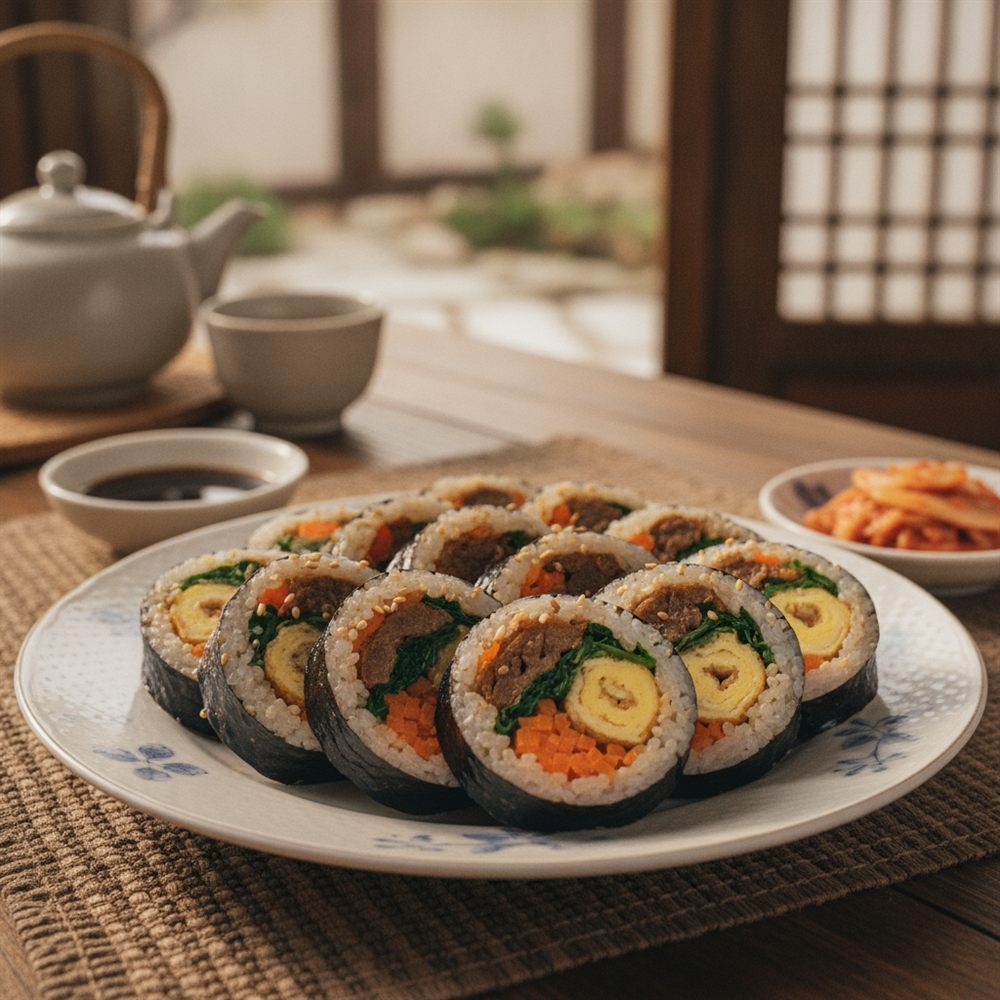
Rice and colorful fillings rolled in seaweed and sliced into bite-size rounds — Korea's beloved picnic and lunchbox food (and no, it is not sushi).
Similar to: It looks like a maki sushi roll, but think of it more as a portable, self-contained sandwich in the round — seaweed instead of bread, with cooked, savory fillings rather than raw fish.
KFG Score
How we rate →Kimbap appears in these rankings
The bottom line on Kimbap
If you are new to Korean food, kimbap is the gentlest first step — zero spice and safe for almost anyone. The one thing to unlearn is the sushi reflex: for us in Korea this is everyday picnic and lunchbox food, not a raw-fish meal, so please do not dunk it in soy sauce.
Eat it the day it is made, since cold rice hardens fast, and grab it fresh from a dedicated kimbap shop. The classic move is a roll with a hot cup of ramen or fish-cake broth on the side.
Want to try Kimbap?
Find Korean restaurants near you on Google Maps — see who serves it, with hours and reviews.
Affiliate link — we may earn a commission at no extra cost to you.
What is Kimbap?
Kimbap is seasoned rice and a lineup of fillings rolled tight inside a sheet of dried seaweed (gim), then sliced into coins. The name literally means gim (seaweed) plus bap (rice). It is the food of Korean daily life: the thing your mom packs for a school field trip, what you grab at a convenience store or a dedicated kimbap shop before a hike, what shows up at picnics and on train rides. Every Korean has a childhood memory tied to it — usually of a foil-wrapped roll cut into rounds, with the crispy end pieces being the ones everyone fights over. It is portable, filling, and endlessly customizable.
What does it taste like?
Kimbap is gentle, savory, and clean-tasting — not spicy at all in its classic form. The rice is lightly seasoned with sesame oil and salt, which gives the whole thing a warm, nutty aroma. Each bite is a little balanced package: the toasty seaweed, the soft rice, and a mix of textures from the fillings — crunchy pickled radish, savory egg, fresh vegetables, a bit of protein. It is comforting and mild, the kind of food anyone can enjoy on the first try.
🌶️ Heat: Classic kimbap is not spicy at all — it is one of the safest, most beginner-friendly Korean foods there is. The only exceptions are specialty versions ordered spicy on purpose, like tuna kimbap with a kick of gochujang, or kimchi kimbap. If you see a normal roll, you can assume zero heat.
🎬 Kimbap in K-dramas & K-pop
Beyond lunchboxes, kimbap has a warm, recurring place on screen.
- Extraordinary Attorney Woo (2022) — The hit drama's heroine, autistic attorney Woo Young-woo, eats gimbap almost every day — her father runs a gimbap shop, and she likes it because she can see every ingredient inside. The show made gimbap so visible that outlets reported a worldwide bump in kimbap sales after it aired.▶ Watch on YouTube
- Picnic and outing scenes — A parent rolling kimbap at dawn for a child's school picnic or a family day trip is a classic tender domestic moment across many dramas.▶ Watch on YouTube
Scenes are described for reference only; we do not host any clips or images.
🧾 Key ingredients
- Gim (dried seaweed sheets)
- Steamed rice seasoned with sesame oil and salt
- Danmuji (yellow pickled radish)
- Egg (cooked into strips)
- Carrot
- Spinach or other greens
- Bulgogi, ham, tuna, or imitation crab (varies by type)
🥗 Dietary notes
Vegetable kimbap (yachae kimbap) is a genuinely easy vegetarian option, and it is common. That said, the classic roll usually includes egg, ham, fish cake, or imitation crab, so check the fillings. The rice is often finished with sesame oil rather than the vinegar used in sushi. It is not reliably gluten-free — imitation crab, fish cake, and some processed meats contain wheat, and the pickled radish or seasonings can vary. Sesame is present in almost every roll.
To cook Kimbap at home you need
The rest is fresh produce you can buy anywhere. These are the Korean staples — buy once, and they keep.
The full Korean pantry, ranked by what each staple unlocks →
How to eat Kimbap
You eat it by the piece, popping each round in whole or in one or two bites — no soy sauce or wasabi needed, and dunking it in soy sauce is not the Korean way. It travels beautifully, which is the whole point: it is grab-and-go food. A very common pairing is a cup of instant ramen or a bowl of odeng broth on the side, especially at a bunsik shop. Convenience stores sell triangular gimbap (samgak-gimbap) as a one-handed snack too.
🍜 Common variations
- Chamchi kimbap (tuna with mayo)
- Cheese kimbap
- Kimchi kimbap (with a spicy kick)
- Sogogi / bulgogi kimbap (marinated beef)
- Chungmu kimbap (tiny plain rolls served with spicy squid and radish on the side)
- Nude kimbap (rice on the outside, seaweed in)
💡 Insider tips
- This is the perfect first Korean food if you are nervous — mild, no spice, and familiar-looking.
- Eat it the day it is made. Kimbap does not refrigerate well; the rice hardens and the seaweed toughens when cold, so it is a same-day food.
- Grab it from a dedicated kimbap chain (like the ones with 'gimbap' in the name) for the freshest, cheapest, most authentic version.
- Try tuna (chamchi) or bulgogi kimbap if plain seems too simple — they are the crowd favorites.
- Pair it with a hot cup of ramen or fish-cake broth for the classic quick Korean lunch combo.
Kimbap — FAQ
+ − Is kimbap the same as sushi?
No, and Koreans are a little particular about this. Sushi rice is seasoned with vinegar and often paired with raw fish; kimbap rice is seasoned with sesame oil and salt, and the fillings are cooked, pickled, or fresh vegetables — not raw fish. Kimbap is everyday, casual, portable food, closer in spirit to a rolled sandwich than to a sushi meal.
+ − Is kimbap spicy?
Classic kimbap is not spicy at all. Only specific versions like kimchi kimbap or a spicy tuna roll have heat, and those are ordered on purpose.
+ − Can vegetarians eat kimbap?
Yes, if you order vegetable kimbap (yachae kimbap). But the standard roll usually contains egg, ham, or imitation crab, so always confirm the fillings.
+ − How do you eat kimbap — with soy sauce?
You just eat the slices as they are, one piece at a time. No dipping sauce is needed or traditional. It is designed to be a complete, self-contained bite.
Sources & further reading
Written from first-hand experience. Recipes and spice levels vary by cook, region, and restaurant. If you have food allergies, always confirm the exact ingredients before you eat.