Mandu만두
Korean Dumplings
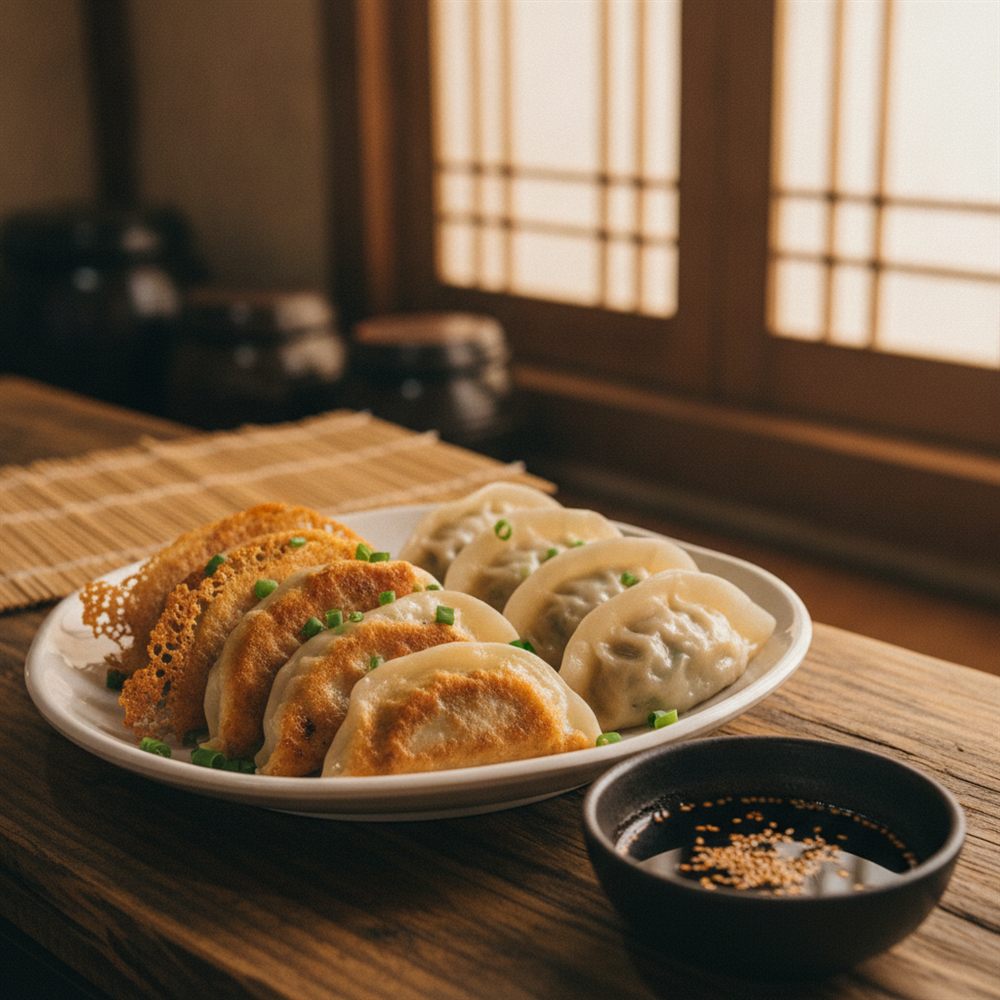
Korean dumplings stuffed with pork, tofu, vegetables, and glass noodles — steamed, pan-fried, boiled, or dropped into soup. An everyday comfort food and a holiday must-have.
Similar to: Think Japanese gyoza or Chinese potstickers and wontons — same dumpling family. Korean mandu tends to be bigger and more generously stuffed, and the signature move is the glass noodles in the filling plus the versatility of steaming it, frying it, boiling it, or floating it in soup. If gyoza is the crispy pan-fried cousin, mandu is the whole extended family.
KFG Score
How we rate →The bottom line on Mandu
Mandu is about as safe an entry into Korean food as it gets — regular dumplings are not spicy at all, just savory and gently seasoned, so kids and cautious eaters are fine. For us it is both an everyday comfort food and a Lunar New Year ritual, when the whole family folds hundreds together.
If you are new, start with gun-mandu, the pan-fried version — the crispy bottom is universally loved. Dip one corner in soy sauce with a splash of vinegar, and in winter order mandu-guk, the coziest, most comforting bowl of all.
Want to try Mandu?
Find Korean restaurants near you on Google Maps — see who serves it, with hours and reviews.
Affiliate link — we may earn a commission at no extra cost to you.
What is Mandu?
Mandu is the Korean dumpling, and honestly it is one of those foods every Korean grew up with. A thin wheat wrapper is folded around a filling that usually mixes ground pork with tofu, chopped kimchi or plain cabbage, garlic chives, onion, and dangmyeon (sweet potato glass noodles) that soak up all the juices. The magic is in how many ways we cook the same dumpling: jjin-mandu is steamed and soft, gun-mandu is pan-fried until the bottom is crispy and golden, mul-mandu is boiled, and mandu-guk is a warm soup where the dumplings float in a light beef or anchovy broth. Some families press the dough into pretty half-moons and pleat the edges; others fold it into round little purses. It is a weekday dinner, a lunchbox filler, a late-night snack, and — most importantly — a Lunar New Year (Seollal) tradition, when the whole family sits around the table folding hundreds of them together.
What does it taste like?
Savory and gently seasoned, with the pork giving richness and the tofu keeping the filling light and almost fluffy. The glass noodles add a soft chew, and garlic and sesame oil run through the background. Pan-fried mandu has that irresistible crispy-bottom, tender-top contrast; steamed mandu is pillowy; soup mandu is comforting and mild. Kimchi mandu brings a tangy, slightly spicy kick.
🌶️ Heat: Regular mandu is not spicy at all — mild and family-friendly. Kimchi mandu is the exception, landing around a 2: pleasantly tangy with a light chili warmth, nothing that will overwhelm you. The dipping sauce (soy sauce with a splash of vinegar) is where you can add optional heat with a bit of chili oil.
🧾 Key ingredients
- Ground pork (sometimes beef or a pork-beef mix)
- Tofu, squeezed dry
- Dangmyeon (sweet potato glass noodles)
- Garlic chives, cabbage or kimchi, onion
- Garlic, sesame oil, soy sauce
- Thin wheat flour wrappers
🥗 Dietary notes
Most mandu contains pork, but vegetable-only (gogi-anin or 'kimchi-tofu') versions are common and easy to find frozen. Vegetarians should still check that the wrapper filling has no meat and that kimchi mandu was not made with fish-sauce kimchi. The wheat wrappers contain gluten, so mandu is not gluten-free. The dipping sauce is soy-based.
To cook Mandu at home you need
The rest is fresh produce you can buy anywhere. These are the Korean staples — buy once, and they keep.
The full Korean pantry, ranked by what each staple unlocks →
How to eat Mandu
Grab a dumpling with chopsticks, dip one corner into the soy-vinegar sauce, and eat it in one or two bites — careful, freshly cooked mandu holds hot steam inside. With soup mandu (mandu-guk), you eat the dumplings and drink the broth together with a spoon. At street stalls and markets you will often get a paper cup of pan-fried mandu to eat on the go.
🍜 Common variations
- Jjin-mandu — steamed, soft and juicy
- Gun-mandu (yaki-mandu) — pan-fried with a crispy bottom
- Mul-mandu — small boiled dumplings
- Mandu-guk — dumplings in a warm broth, a Seollal classic
- Kimchi mandu — tangy, mildly spicy filling
- Wang-mandu — 'king' dumplings, big and steamed, often with a fluffier bun-like wrapper
- Tteok-mandu-guk — rice cakes and dumplings in one soup
💡 Insider tips
- New to Korean food? Start with gun-mandu (pan-fried) — the crispy bottom is universally loved and the filling is mild.
- Frozen mandu from a Korean grocery store is genuinely good; a few minutes in a pan with a splash of water and a lid gives you steam-then-crisp results at home.
- Mix your own dipping sauce: soy sauce, a little rice vinegar, and a few drops of sesame oil. Add chili oil only if you want heat.
- If you see mandu-guk on a menu in winter, order it — it is the coziest, most comforting version.
- Do not bite straight through a fresh dumpling; the inside is molten. Let it cool for a few seconds first.
Mandu — FAQ
+ − Is mandu spicy?
Regular mandu is not spicy — it is mild and works for kids and cautious eaters. Only kimchi mandu has a light tang and gentle heat, and even that is very manageable.
+ − What is the difference between mandu and gyoza?
They belong to the same dumpling family and gyoza actually shares roots with Chinese jiaozi. Korean mandu is usually larger and often includes tofu and sweet potato glass noodles in the filling, and it is cooked in more ways — steamed, fried, boiled, or in soup.
+ − Is there a vegetarian mandu?
Yes. Vegetable mandu filled with tofu, glass noodles, cabbage, and chives is common, especially in frozen form. Just confirm there is no pork and that any kimchi inside was made without fish sauce.
+ − Why do Koreans eat mandu at Lunar New Year?
Folding mandu together is a family ritual, and mandu-guk (or tteok-mandu-guk) is a traditional Seollal dish. Sharing a bowl symbolizes a fresh, prosperous start to the year.
Sources & further reading
Written from first-hand experience. Recipes and spice levels vary by cook, region, and restaurant. If you have food allergies, always confirm the exact ingredients before you eat.