Tteokguk떡국
Sliced Rice Cake Soup
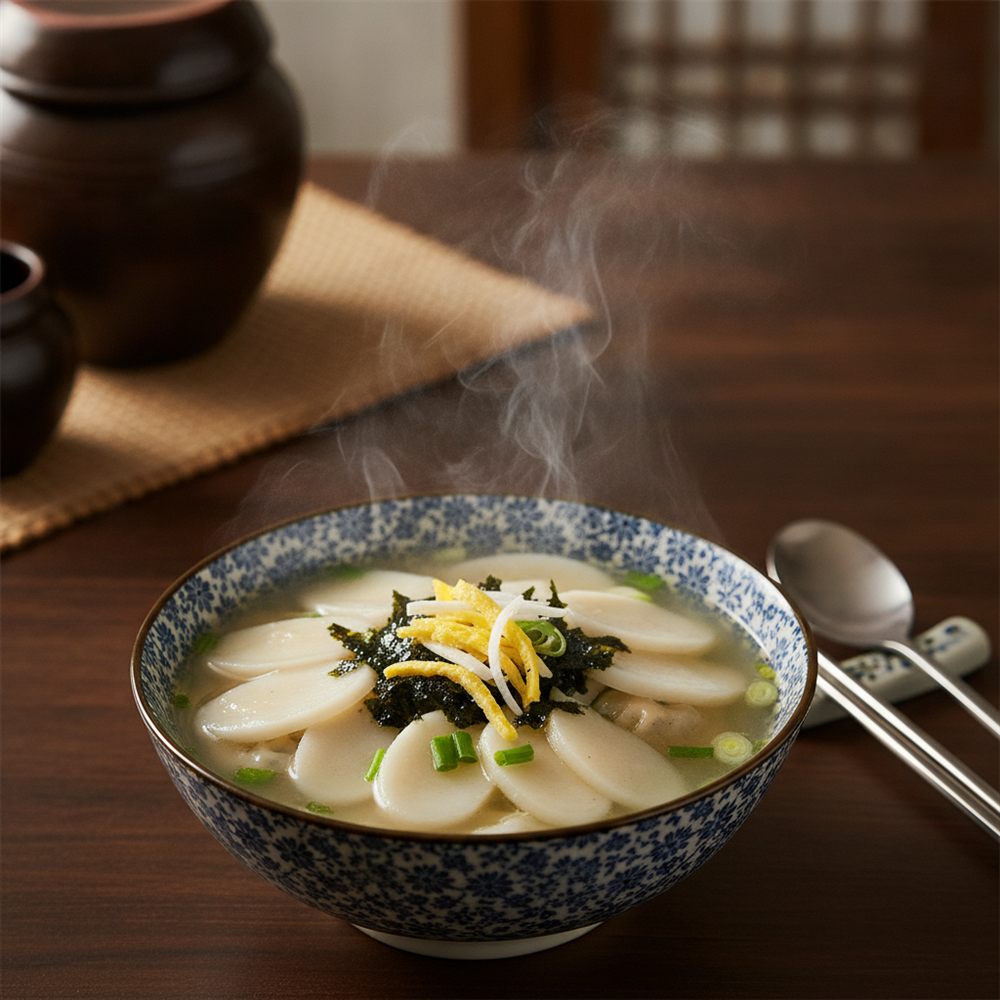
A clean, comforting beef-broth soup with chewy oval rice cakes, eaten on Korean New Year — and by tradition, eating a bowl means you have turned a year older.
Similar to: Imagine a lighter, cleaner take on Italian wedding soup or a delicate beef-and-noodle soup — but instead of pasta, you get soft, chewy rice cakes that behave a bit like gnocchi.
KFG Score
How we rate →Tteokguk appears in these rankings
The bottom line on Tteokguk
If you want to explore Korean food without any chili heat, tteokguk is about as gentle as it gets — a clean beef broth with soft, chewy rice cakes. For us it is inseparable from Seollal, the Lunar New Year; eating a bowl is said to make you a year older.
If you love that chewy texture, order the tteok-manduguk version to get dumplings in the same bowl, and eat the rice cakes while they still have some bite, since they soften as they sit.
Want to try Tteokguk?
Find Korean restaurants near you on Google Maps — see who serves it, with hours and reviews.
Affiliate link — we may earn a commission at no extra cost to you.
What is Tteokguk?
Tteokguk is a mild, clear soup of thinly sliced rice cakes (tteok) in a savory broth, usually made from beef brisket or, in some regions, anchovy or bone broth. The rice cakes are cut on a diagonal into soft, coin-shaped ovals that turn tender and slightly chewy as they cook. It is finished with shredded beef, thin strips of egg (jidan), toasted seaweed (gim) flakes, and green onion. Above all, tteokguk is the dish of Seollal, the Korean Lunar New Year. There is a lovely cultural belief attached: to Koreans, eating a bowl of tteokguk on New Year's Day symbolizes gaining a year of age. Children will half-jokingly ask, 'How many bowls of tteokguk have you eaten?' as a way of asking how old you are. The white rice cakes stand for a clean, fresh start, and the coin-like slices are said to wish for prosperity in the year ahead.
What does it taste like?
Gentle, clean, and savory — a light beefy broth with a soft garlic-and-sesame warmth. The rice cakes are mild and pleasantly chewy, soaking up the broth. Nothing about it is heavy or aggressive; it is pure comfort food.
🌶️ Heat: Not spicy at all. Tteokguk is one of the mildest, most soothing Korean soups there is — perfect if you want to explore Korean food without any chili heat.
🎬 Tteokguk in K-dramas & K-pop
Tteokguk is tied to a specific moment in the Korean calendar.
- Lunar New Year (Seollal) scenes — Eating tteokguk on New Year is so bound up with 'turning a year older' that holiday episodes almost always show a family sharing a bowl and teasing each other about their age.▶ Watch on YouTube
Scenes are described for reference only; we do not host any clips or images.
🧾 Key ingredients
- Garae-tteok (cylindrical rice cakes, sliced into ovals)
- Beef brisket (or anchovy/bone broth)
- Egg (fried thin and shredded as garnish)
- Gim (dried seaweed) flakes
- Garlic, green onion, and sesame oil
🥗 Dietary notes
The traditional broth is beef- or anchovy-based, so it is usually not vegetarian, but a vegetable- or mushroom-broth version is easy to make at home and sometimes offered. The rice cakes themselves are made from rice and are naturally gluten-free; just note the garnishes (egg, seaweed) and check the broth base.
To cook Tteokguk at home you need
The rest is fresh produce you can buy anywhere. These are the Korean staples — buy once, and they keep.
The full Korean pantry, ranked by what each staple unlocks →
How to eat Tteokguk
Eat it hot, with a spoon for the broth and chopsticks for the rice cakes. It is typically served as a full one-bowl meal with a few side dishes (banchan) like kimchi. On Seollal it is often made with mandu (dumplings) added, and eaten as part of the New Year's table after bowing to elders.
🍜 Common variations
- Tteok-manduguk — the same soup with dumplings (mandu) added, extremely popular
- Regional broths — beef brisket (most common), anchovy, or even oyster/seafood in coastal areas
- Joraeng-i tteokguk — a Gaeseong-style version using little pinched, peanut-shaped rice cakes
- Chicken-broth versions in some households
💡 Insider tips
- This is one of the safest, gentlest Korean soups for first-timers — no spice, familiar comfort-food vibes.
- If you love the chewy texture, order the tteok-manduguk version to get dumplings in the same bowl.
- The rice cakes soften as they sit, so eat them while they still have a little bite.
- Around Lunar New Year (usually late January or February), it is everywhere — a great time to try the authentic holiday version.
- A splash of the broth over rice cakes plus a bite of kimchi is the classic mild-plus-tangy combo.
Tteokguk — FAQ
+ − Why do Koreans eat tteokguk on New Year?
It is the traditional Seollal (Lunar New Year) dish. Eating a bowl symbolizes becoming a year older, and the clean white rice cakes represent a fresh start, while the coin-shaped slices wish for prosperity. It is one of the most culturally meaningful Korean foods.
+ − Does eating tteokguk really make you a year older?
It is a beloved figure of speech, not a rule. Traditionally Koreans counted age by the calendar year rather than the birthday, so New Year's Day was when everyone 'aged up' together — and the tteokguk bowl became the symbol of it. People still joke, 'How many bowls have you had?' to ask someone's age.
+ − Is tteokguk spicy?
Not at all. It is a clear, mild broth with zero chili. If you are easing into Korean food, this is one of the friendliest dishes to start with.
+ − What are the rice cakes made of?
They are garae-tteok — cylinders of pounded rice — sliced thin on the diagonal into ovals. They are chewy, mildly sweet-neutral, and naturally gluten-free.
Sources & further reading
Written from first-hand experience. Recipes and spice levels vary by cook, region, and restaurant. If you have food allergies, always confirm the exact ingredients before you eat.