Kalguksu칼국수
Hand-Cut Noodle Soup
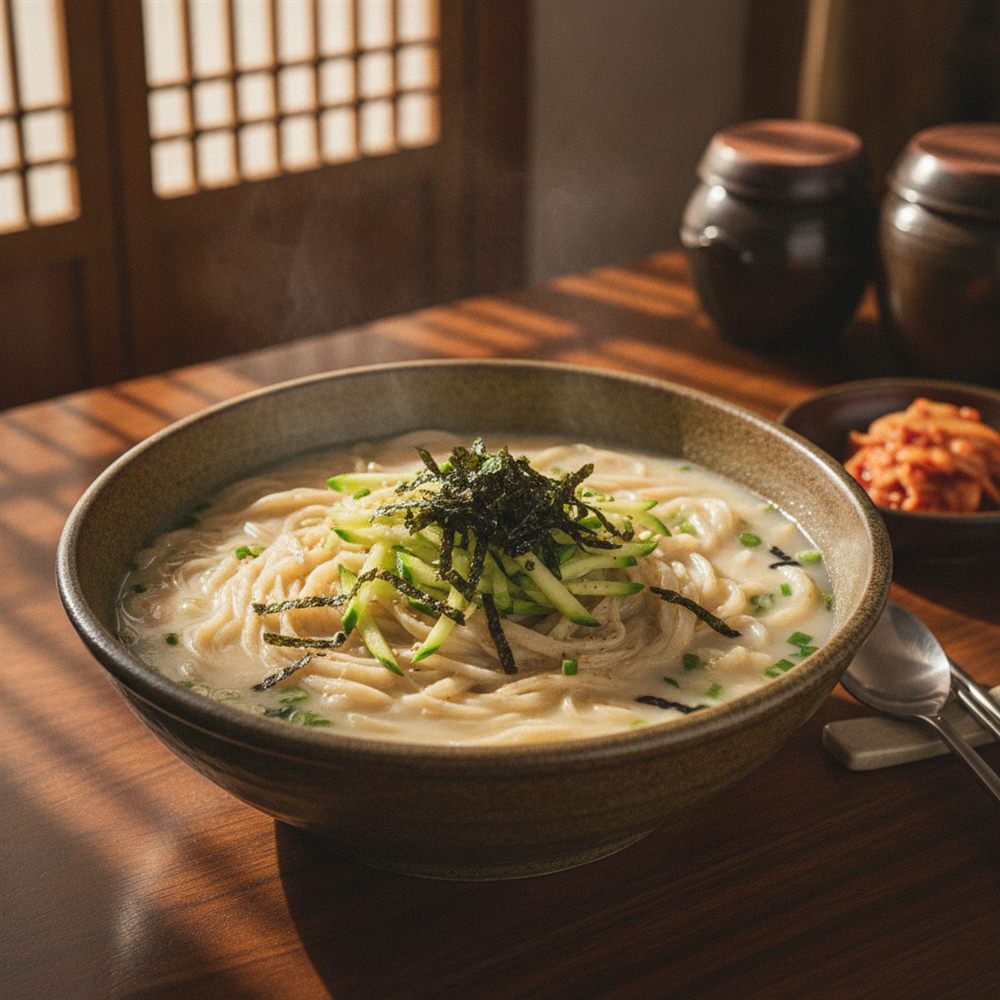
Soft, hand-cut wheat noodles in a warm, comforting broth, usually anchovy or chicken. The Korean bowl of soup you crave on a rainy day.
Similar to: It is very much a Korean chicken-noodle-soup for the soul, but with softer, thicker hand-cut noodles and often a light anchovy-based broth instead of chicken. Comfort in a bowl, the way homemade soup is when you are under the weather.
KFG Score
How we rate →The bottom line on Kalguksu
If you do not want spice, Kalguksu is one of the best gentle introductions to Korean food — the broth is mild by default, and any heat is up to you. For us in Korea this is humble, homey comfort food; we especially crave it on cold or rainy days, and there is even a saying that rain makes people want a bowl of it. It tastes like someone is taking care of you.
Add the seasoned soy-chili sauce on the side a little at a time, since it can make the bowl spicy fast, and eat it promptly before the soft hand-cut noodles keep swelling. If fresh kimchi is offered, order it — the crisp tang against the mild broth is a classic pairing.
Want to try Kalguksu?
Find Korean restaurants near you on Google Maps — see who serves it, with hours and reviews.
Affiliate link — we may earn a commission at no extra cost to you.
What is Kalguksu?
Kalguksu literally means knife noodles, because the noodles are made by rolling out fresh wheat dough and cutting it into strips by hand with a knife, rather than extruding them by machine. Those hand-cut noodles are soft, slightly irregular, and a little starchy, which makes the broth thicker and cozier. They are simmered in a warm broth, most often made from dried anchovies and kelp, or from chicken. It is humble, homey food. Koreans especially crave kalguksu on cold or rainy days; there is even a saying that rain makes people want a bowl of it. It is the kind of dish that tastes like someone is taking care of you.
What does it taste like?
Clean, savory, and soothing. The anchovy-kelp broth is light but deeply flavored with a gentle sea-and-umami depth, while the chicken version is mellow and comforting like a good chicken soup. The hand-cut noodles are soft and tender with a slight chew, and because they shed starch into the pot, the broth turns silky and slightly thick. It is warm, mild, and easy on the stomach.
🌶️ Heat: Kalguksu is essentially not spicy, around a 0 to 1. The broth itself is mild. Any heat comes only from the small dish of seasoned soy-chili sauce (yangnyeomjang) served on the side, which you add yourself to taste. Skip that and the bowl is completely gentle.
🧾 Key ingredients
- Hand-cut wheat noodles
- Anchovy and kelp broth (or chicken broth)
- Zucchini
- Potato
- Onion
- Green onion
- Garlic
- Seasoned soy-chili sauce on the side
🥗 Dietary notes
The broth is usually made with anchovies or chicken, so it is generally not vegetarian, though a vegetable or kelp-and-mushroom broth version exists. It is not gluten-free (wheat noodles). Seafood-broth versions may not suit shellfish allergies. The side sauce contains soy and chili.
To cook Kalguksu at home you need
The rest is fresh produce you can buy anywhere. These are the Korean staples — buy once, and they keep.
The full Korean pantry, ranked by what each staple unlocks →
How to eat Kalguksu
Eat it hot, right away, with chopsticks for the noodles and a spoon for the broth. If you want more punch, stir in a little of the seasoned soy-chili sauce that comes on the side, adding it bit by bit. Kalguksu is often served with fresh kimchi, especially a quick summer radish kimchi (yeolmu or geotjeori), which pairs perfectly with the mild broth. Do not let it sit too long, as the soft noodles keep absorbing broth and swelling.
🍜 Common variations
- Anchovy-broth kalguksu (the everyday classic)
- Dak-kalguksu (chicken broth and shredded chicken)
- Haemul-kalguksu (seafood, with clams and shrimp)
- Bajirak-kalguksu (clam broth)
- Kimchi-kalguksu (with kimchi cooked into the broth for tang and heat)
- Patkalguksu (a sweet-savory red bean version, more of a regional specialty)
💡 Insider tips
- This is an ideal gentle introduction to Korean food if you do not want spice, since the broth is mild by default.
- Add the side chili sauce a little at a time. It can quickly make the bowl spicy, so taste as you go.
- Eat it promptly. The soft hand-cut noodles keep soaking up broth and can turn mushy if they sit.
- Order it with fresh kimchi if offered. The crisp, tangy kimchi against the warm mild broth is a classic pairing.
- The slightly cloudy, thickened broth is not a flaw, it is starch from the fresh noodles, and it is what makes kalguksu so cozy.
Kalguksu — FAQ
+ − Why is it called knife noodles?
Because the noodles are made by rolling out fresh dough and cutting it into strips by hand with a knife, rather than being machine-made. That is what gives them their soft, slightly uneven texture.
+ − Is kalguksu spicy?
No, the broth is mild. It only gets spicy if you add the seasoned soy-chili sauce served on the side, and that is entirely up to you.
+ − What is the broth made of?
Most commonly a broth simmered from dried anchovies and kelp, which gives a clean, savory sea flavor. Chicken and clam versions are also very popular.
+ − Why does the broth look a little cloudy?
The fresh hand-cut noodles release starch as they cook, which slightly thickens the broth and makes it silky. It is a good sign, not a problem.
Sources & further reading
Written from first-hand experience. Recipes and spice levels vary by cook, region, and restaurant. If you have food allergies, always confirm the exact ingredients before you eat.