Ramyeon라면
Korean Instant Ramen
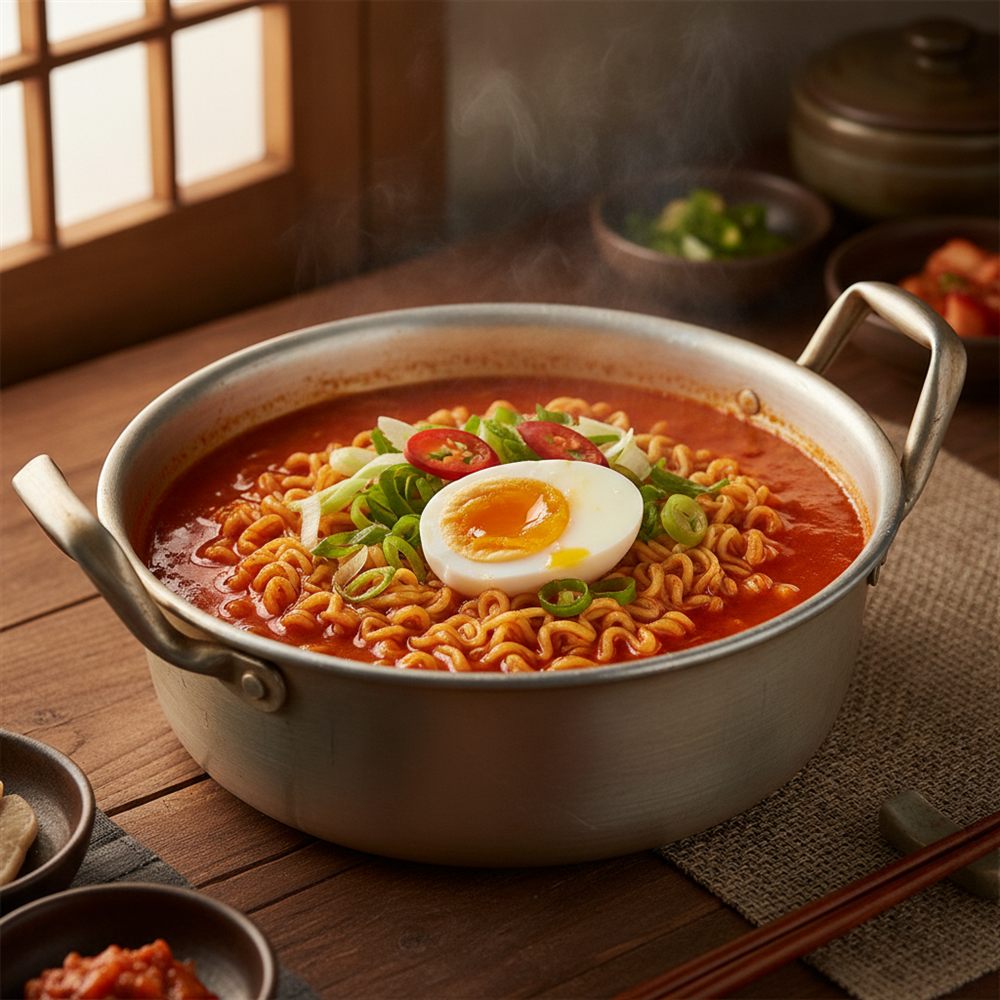
Korea's spicy instant noodles, like Shin Ramyun, are a genuine everyday food, not a sad backup meal. Fast, fiery, and endlessly customizable.
Similar to: It is instant ramen, so on the surface it is like the packet noodles known worldwide, but treat it as a serious step up: bolder, spicier, chewier, and genuinely eaten as real food rather than a desperation meal. Think of the cheese-and-egg upgrade culture the way Americans customize instant mac and cheese, but spicier.
KFG Score
How we rate →Ramyeon appears in these rankings
The bottom line on Ramyeon
Here is what outsiders get wrong: in Korea, ramyeon is not a sad backup meal, it is a beloved everyday food people eat with pride. Shin Ramyun sits around a solid 3 out of 5 for heat — noticeable, but manageable, and you can use less of the powder packet to dial it down.
The classic upgrade is to crack in an egg and melt a slice of American cheese on top — it mellows the heat and adds richness. Eat it straight from the pot with the lid as a plate, slurping encouraged.
Want to try Ramyeon?
Find Korean restaurants near you on Google Maps — see who serves it, with hours and reviews.
Affiliate link — we may earn a commission at no extra cost to you.
What is Ramyeon?
Ramyeon is Korean instant ramen: springy wheat noodles cooked in a bold, usually spicy soup made from a seasoning powder packet. Brands like Shin Ramyun, Jin Ramen, and Neoguri are cultural icons here. I want to clear up a common misunderstanding: in Korea, ramyeon is not looked down on as cheap, sad noodles. It is a real, beloved food that people of every age eat with pride, sometimes several times a week. There is even a whole culture of upgrading it. It is a late-night staple, a hiking-trip reward, a dorm-room classic, and a comfort meal after a long day. It is a different animal from Japanese ramen, which is a slow-simmered fresh-broth restaurant dish; Korean ramyeon is an instant food built around that signature spicy red soup.
What does it taste like?
Bold, spicy, and deeply savory, with a punchy garlicky, beefy or seafood-forward broth depending on the brand. The noodles are chewy and a little wavy. The seasoning is unapologetically strong, salty, spicy, and umami-packed. It hits fast and satisfies immediately, which is exactly why it is so addictive.
🌶️ Heat: The famous Shin Ramyun sits around a 3, a solid, noticeable heat that most people can handle but will feel. Milder options exist (Jin Ramen comes in mild and spicy), and some, like Buldak (fire chicken) noodles, go way hotter, a 4 to 5. You can always use less of the powder packet to dial the spice down.
🎬 Ramyeon in K-dramas & K-pop
Instant ramyeon is practically a supporting character in Korean film and TV.
- One Fine Spring Day (2001) — The line 'Do you want to eat ramyeon before you go?' (라면 먹고 갈래?) became Korea's most famous flirtation line — still endlessly quoted and parodied decades later.▶ Watch on YouTube
- Parasite (2019) — The celebrated 'ram-don' (jjapaguri) is built on instant ramyeon mixed with instant jjajangmyeon.▶ Watch on YouTube
- Countless dramas — Characters eating ramyeon straight from the pot, using the lid as a plate, is a beloved, instantly recognizable on-screen ritual.▶ Watch on YouTube
Scenes are described for reference only; we do not host any clips or images.
🧾 Key ingredients
- Instant wheat noodles
- Seasoning powder packet (spicy, savory base)
- Dried vegetable flakes
- Water
- Common add-ins: egg, green onion, cheese, kimchi
🥗 Dietary notes
Most popular seasoning packets contain beef or seafood extracts, so standard ramyeon is usually not vegetarian, though some vegan-friendly brands exist. It is not gluten-free (wheat noodles). It is high in sodium, so it is a treat, not a health food. Check the packet if you have allergies, as many contain soy and traces of shellfish.
To cook Ramyeon at home you need
The rest is fresh produce you can buy anywhere. These are the Korean staples — buy once, and they keep.
The full Korean pantry, ranked by what each staple unlocks →
How to eat Ramyeon
Boil water, add the noodles and both the powder and flake packets, and cook for the time on the package (usually around 4 to 5 minutes). Eat it straight from the pot with the lid used as a plate; that is the authentic, cozy way. Slurping is encouraged. Here is the real fun: Koreans love to customize. Crack in an egg near the end, drop a slice of American cheese on top for creamy richness, throw in kimchi, green onions, or leftover rice at the end to soak up the spicy broth. Everyone has their own perfect method.
🍜 Common variations
- Shin Ramyun (the iconic spicy beef-flavored standard)
- Neoguri (thick udon-style noodles, seafood broth)
- Jin Ramen (available in mild and spicy)
- Buldak / fire chicken noodles (extreme spicy, often stir-fried style)
- Cheese ramyeon (topped with melted cheese)
- Rabokki (ramyeon noodles mixed into tteokbokki)
💡 Insider tips
- Add an egg and a slice of cheese. This is the classic Korean upgrade and it mellows the heat while adding richness.
- If it is too spicy, use only part of the powder packet, or stir in cheese, an egg, or a little milk to tame it.
- Do not overcook the noodles. Korean ramyeon is best when the noodles still have a firm, chewy bite.
- Save some broth and stir in a spoon of rice at the very end. Soaking up that spicy soup is a beloved finishing move.
- This is instant food, but it is not looked down on here. Enjoy it as the real, everyday comfort meal it is.
Ramyeon — FAQ
+ − Is Korean ramyeon the same as Japanese ramen?
No. Japanese ramen is usually a fresh-noodle restaurant dish with a slow-cooked broth. Korean ramyeon is an instant food centered on a bold, spicy seasoning packet. Both are great, but they are quite different experiences.
+ − How spicy is Shin Ramyun really?
It is a moderate, noticeable heat, around a 3 out of 5. Most people can enjoy it, but you will feel it. Adding egg or cheese softens the kick.
+ − Is instant ramyeon considered cheap or low-quality in Korea?
Not at all. It is a genuinely loved everyday food eaten by everyone, with a whole culture of customizing and upgrading it. It is comfort food, not a last resort.
+ − What do Koreans add to their ramyeon?
Very commonly an egg and a slice of American cheese, plus green onions, kimchi, or leftover rice stirred into the broth at the end. Everyone has a personal favorite combination.
Sources & further reading
Written from first-hand experience. Recipes and spice levels vary by cook, region, and restaurant. If you have food allergies, always confirm the exact ingredients before you eat.