Kongguksu콩국수
Cold Soy Milk Noodles
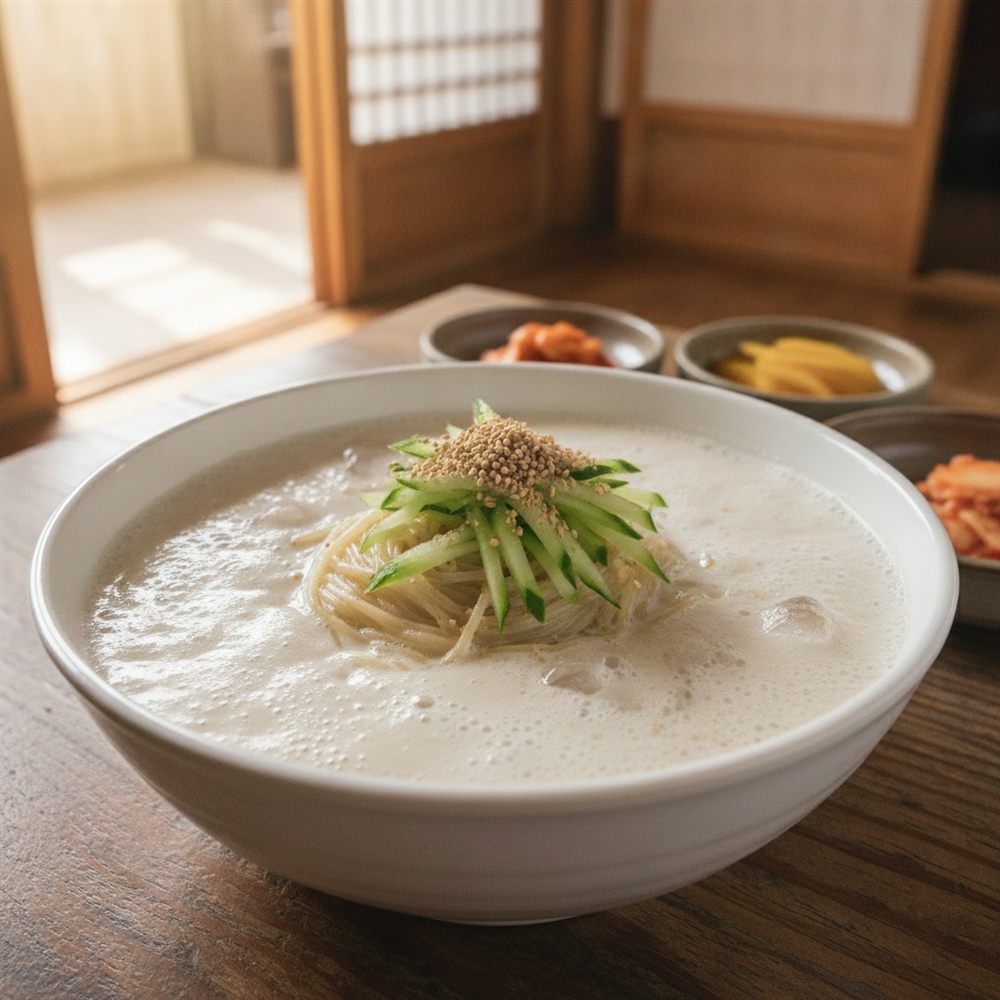
Chilled wheat noodles in a cold, savory, nutty soy-milk broth — a refreshing Korean summer dish you season with a little salt at the table. Unusual at first, but wonderfully soothing.
Similar to: The closest Western reference point is a chilled, savory soup — imagine a cold, creamy vichyssoise or a very smooth savory horchata, but made from soybeans and poured over noodles. If you have had cold Japanese soba, picture that refreshing coldness, then swap the dipping sauce for a thick, nutty, unsweetened soy-milk broth you sip like a soup.
KFG Score
How we rate →Kongguksu appears in these rankings
The bottom line on Kongguksu
If you are new to Korean food, kongguksu is a gentle, no-spice place to start — just do not expect the sweet soy milk you may know, because this broth is savory, and that surprise trips up almost every first-timer. For us it is a summer ritual for cooling down.
Season it yourself first — a pinch of salt wakes the broth up — and work the cool cucumber into each bite; if it feels too thick, a splash of the ice water in the bowl loosens it perfectly.
Want to try Kongguksu?
Find Korean restaurants near you on Google Maps — see who serves it, with hours and reviews.
Affiliate link — we may earn a commission at no extra cost to you.
What is Kongguksu?
Kongguksu means 'bean noodle soup,' and it is exactly that: thin wheat noodles served in a chilled broth made from freshly ground soybeans. To make the broth, soybeans are soaked, boiled just enough, peeled, and blended with water (and sometimes a few nuts or sesame seeds) into a smooth, creamy, ice-cold soy milk. It is a beloved summer dish — when the heat is unbearable, a cold bowl of kongguksu is how many Koreans cool down. Here is the part that surprises newcomers: unlike sweet Western soy milk, this broth is completely unsweetened and savory, so it is seasoned with a pinch of salt rather than sugar. It usually comes topped with slices of cucumber, sometimes a few halved cherry tomatoes or a spoonful of sesame, and often plenty of ice to keep it frosty.
What does it taste like?
Cool, creamy, and nutty, with the mild earthiness of ground soybeans — think of a thick, savory almond-milk or a very light tahini broth. On its own it is gentle and almost bland by design, which is why you stir in salt to bring it to life. The noodles are cold and slippery, the cucumber adds crunch, and the whole bowl is smooth, filling, and remarkably refreshing on a hot day.
🌶️ Heat: Zero spice. Kongguksu is the opposite of fiery Korean food — it is cool, creamy, and soothing, made precisely to relieve summer heat. The only seasoning is salt, added to taste.
🧾 Key ingredients
- Soybeans (ground into fresh soy milk)
- Thin wheat noodles (somyeon)
- Cucumber
- Salt (added at the table)
- Optional: sesame seeds, pine nuts, cherry tomatoes
- Ice
🥗 Dietary notes
Kongguksu is naturally vegetarian and vegan — the broth is just soybeans and water, with no meat, dairy, or animal stock. It is high in plant protein. The catch is the noodles: standard wheat somyeon contains gluten, so it is not gluten-free unless made with an alternative noodle. Soy allergy sufferers should avoid it entirely.
To cook Kongguksu at home you need
The rest is fresh produce you can buy anywhere. These are the Korean staples — buy once, and they keep.
The full Korean pantry, ranked by what each staple unlocks →
How to eat Kongguksu
First, season it yourself — add a small pinch of salt (some prefer a touch of sugar, but salt is traditional) and stir so the broth wakes up. Then eat the cold noodles with chopsticks and drink the creamy broth with a spoon, alternating with the cucumber and any toppings. Do not wait around; it is meant to be eaten cold, so enjoy it while it is icy.
🍜 Common variations
- Classic kongguksu — smooth soy-milk broth over somyeon
- Kongguksu with black soybeans (seoritae) — a nuttier, grayish broth
- Kong-guksu with added sesame or pine nuts for extra richness
- Kongguksu topped with cherry tomatoes or a boiled egg
- Extra-thick, extra-creamy versions at specialty shops that grind in more beans (and sometimes nuts)
💡 Insider tips
- Season before you judge it — the broth is intentionally plain, and a pinch of salt transforms it from bland to savory and satisfying.
- Do not expect sweetness. This is savory soy milk, so approaching it like a light, cold soup rather than a sweet drink will set your expectations right.
- It is a summer dish; you will see it appear on menus mainly in the hot months, so seek it out in June through August.
- Add the cucumber and toppings into each bite — the crunch and freshness balance the creamy broth beautifully.
- If you find the broth too thick, a splash of the ice water in the bowl loosens it to your liking.
Kongguksu — FAQ
+ − Is kongguksu sweet like soy milk?
No — this is the surprise for newcomers. The soy-milk broth is completely unsweetened and savory, and you season it with salt, not sugar. It tastes like a creamy, nutty cold soup rather than a sweet drink.
+ − Is kongguksu served hot or cold?
Cold, always. It is a summer dish designed to cool you down, often served with ice in the bowl to keep the broth frosty.
+ − Is kongguksu vegan?
Yes. The broth is just ground soybeans and water with no animal products, making it naturally vegan and rich in plant protein. Only the wheat noodles keep it from being gluten-free.
+ − How do I season kongguksu?
Add a small pinch of salt and stir it in — the broth arrives unseasoned on purpose so you can adjust it. Some people prefer a touch of sugar, but salt is the traditional choice.
Sources & further reading
Written from first-hand experience. Recipes and spice levels vary by cook, region, and restaurant. If you have food allergies, always confirm the exact ingredients before you eat.